Introduction
The waterborne sector plays a relevant role in Europe because the European Union is surrounded by oceans and crisscrossed by 43 000 kilometers of navigable inland waterways. About four million people are working in the European waterborne transport sectors. About 81 % of the external trade and more than 40 % of internal trade in the EU are waterborne[1]. Shipping is of strategic importance to the EU economy: in 2023, 3.4 billion tonnes of maritime freight were loaded/unloaded in EU ports. In addition, 395 million passengers passed through the EU’s seaports[2]. This article will look at typical issues in waterborne transports covering the safety of the seafarers, boatmen and dockworkers. The topic of fisheries is not covered in this article, but more information is available in Accident Prevention in Fisheries. The article also does not cover the transport of dangerous goods, which is regulated by specific legislation[3].
Waterborne Transport
Waterborne transport includes maritime and inland waterway transport. Both perform freight as well as passenger transport. Maritime transport is divided into short sea shipping (coastal transport) and deep-sea shipping (long-trade navigation). Short sea shipping includes the movement of cargo and passengers, mainly by sea along a coast. However, it also covers maritime transport between the EU Member States, other states in the Baltic Sea and the Mediterranean as well as Norway and Iceland[4]. In the EU, short sea shipping represented 56.6% of total maritime transport of goods in 2023[5].
Deep-sea shipping refers to the maritime transport of goods on intercontinental routes, crossing oceans[6]. It involves long distances and is generally carried out by liner shipping services[7].
Inland waterway transport plays an important role for the transport of goods in Europe. It is carried out on navigable waterways like rivers, canals or lakes over which vessels of a carrying capacity of no less than 50 tons can navigate when normally loaded[8]. About 41,000 kilometres of inland waterways flow through the EU, transporting around around 150 billion tonne-kilometres of cargo, carried by about 15,000 cargo vessels[9].
Important inland waterways in Europe are: the North Sea - Baltic Corridor, the Mediterranean Corridor, the East - Med Corridor, the Rhine - Alpine Corridor, the Atlantic Corridor, the North Sea - Med Corridor, and the Rhine - Danube Corridor. Approximately 44,000 people work on inland vessels, of which 60% in goods transport and 40% in passenger transport. Passenger transport, especially river cruises has increased over the last decades. Between 2012 and 2019 the number of persons who travel on a river cruise has more than doubled, with up to 1.79 million passengers in 2019[10]. However, demand for river cruises was severely impacted by the 2020 and 2021 Covid pandemic, resulting in a decline in employment figures within the river cruise sector[10].
Compared with other modes of transport, inland waterway transport offers significant advantages[11]. For example, transporting goods by inland waterway uses around 17% of the energy per kilometre/tonne compared to road transport and 50% compared to rail transport. It also creates significantly less noise pollution. Furthermore, congestion on waterways is minimal compared to other modes of transport. Consequently, the modal shift strategy has been incorporated into EU policies such as the European Green Deal and the Sustainable and Smart Mobility Strategy aimed at increasing transport by inland waterways and short sea shipping by 25% by 2030, and by 50% by 2050 [11] [12]. The EU Commission has launched the Inland Waterway Transport Action Plan 2021-2027[9], which comprises actions to deliver on the objectives of shifting more freight transport to inland waterways and setting the sector on a path to zero emissions. The plan also promotes further digitalisation and includes measures to support the current and future workforce.
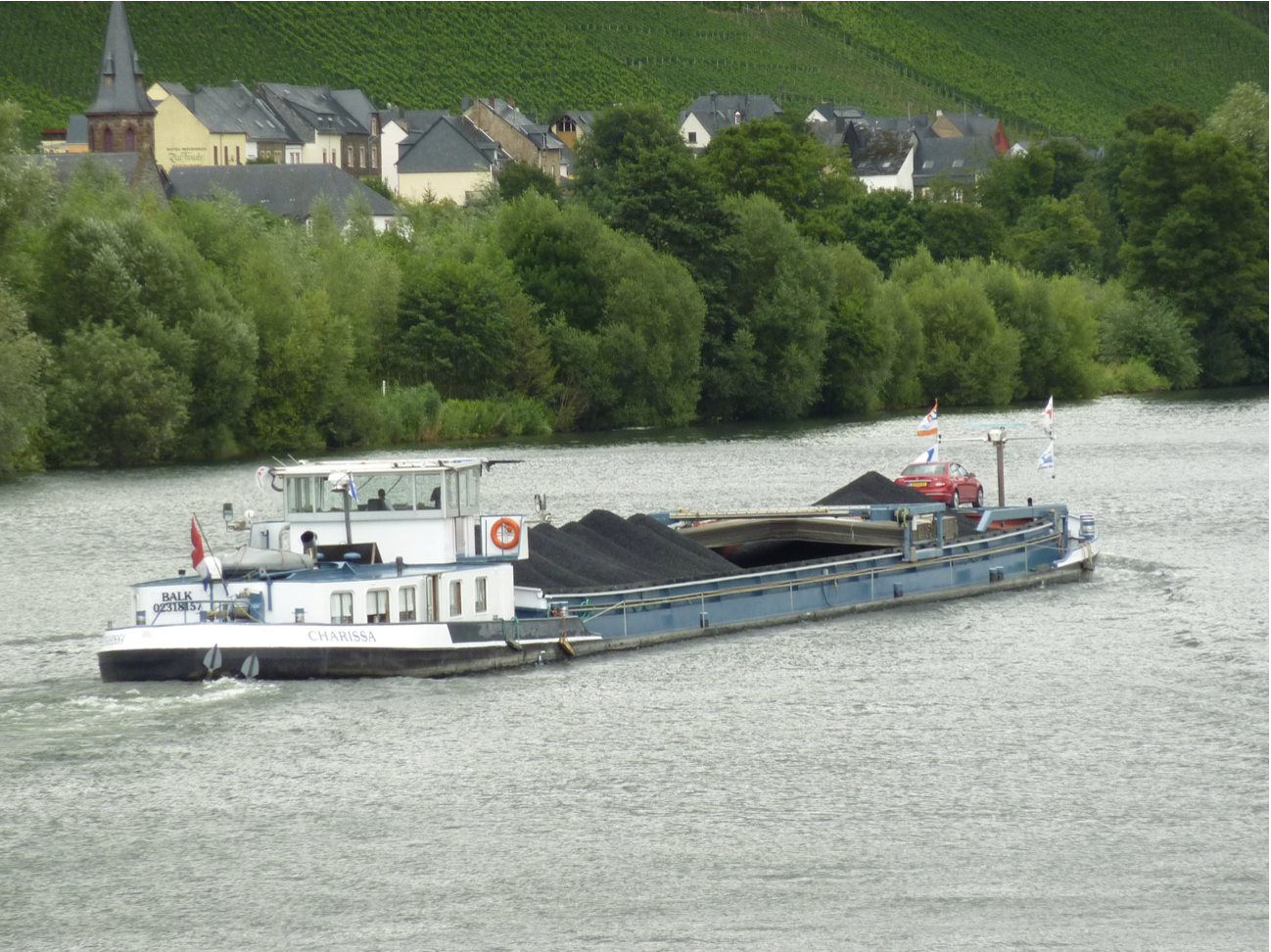
Inland waterway transport Moselle/Germany
Ships carry a many different goods and vary greatly in size and type. There are: tankers, bulk carriers, container ships, roll-on roll-off vessels, general cargo vessels, ferries, tugs, passenger ferries and cruise ships or fishing vessels Larger sized ships are used for deep-sea and smaller ones for short sea transport. Barges are mainly used to carry cargo on inland waterways. Working on board of a ship is very different from occupations on land. Looking at the maritime transport, a ship crew has a very clear structure and hierarchy. Each seafarer has a special position with specific responsibilities. The master or captain has the overall authority and responsibility for safe and efficient operations of the vessel and for the safety and the protection of the crew. Other crew members are (e.g. for a merchant vessel):
- the deck department with deck officers (chief officer, second officer, third officer, deck cadet) and deck ratings,
- the engine department with engineers (chief, first, second, third assistant engineer, engine cadet) and engine ratings and,
- the catering department with cooks and stewards.
Workers in the inland waterway transport sector have three main functions:
- The boatmaster is responsible for the barge (navigation and maintenance) and the crew.
- The helmsman assists with the navigation, but does not have the overall responsibility.
- The boatman also assists during navigation and does maintenance and mooring.
Ports are land-based infrastructures serving waterborne transport. They are places with facilities for merchant ships to moor and to load or unload cargo or to disembark or embark passengers to or from vessels[13]. Working in ports involves a number of different workers and contractors, such as dockworkers, truck drivers, crane drivers, mooring crews, ship crews, customs and excise staff and others. Dockworkers work on docks, quaysides or ships, to transfer goods between ships, trucks and various areas[14]. In the seaports of the EU, Turkey and Norway some 2,290 port operators currently employ around 400,000 port workers[15]. About 200 inland ports exist in the European member states including Switzerland, Moldova and Ukraine[16].
Working conditions
In 2023, about 297,000 people were employed in the maritime transport sector in the EU which account for 4.8 % of the total transport workforce. The majority of those employed in the water transport sector are male, accounting for 78% of the total[2].
The working conditions of maritime transportation, inland waterway transportation and working on shore (dock work) differ widely. While deep-sea transport is of high risk for the safety and health of workers, inland waterway transport is one of the safest modes of transport[8].
Maritime transport
Seafarers spend long periods being at sea, often several months. Being away from home for a long time, they are one of the most isolated group of workers in the world. Social isolation and the long separation from families was found to be a significant issue for seafarers[17] [18] [19]. The presence of a multicultural environment and linguistic barriers can contribute to making difficult to develop social relationships on board of ships, increasing feelings of isolation[18]. Having access to reliable digital networks that enable video calling improves the ability to keep contact with loved ones and maintain family relationships. However, seafarers also report that the wins of enhanced connectivity are limited by issues such as inconsistent service quality and data limitations[20]. Good employment, working and living conditions, opportunities for career advancement, and the ability to maintain regular contact with family and friends are widely regarded as key factors influencing both the recruitment and retention of seafarers, as well as the overall attractiveness of the sector[21].
Inland Waterway Transport
The inland waterway transport sector is characterised by a large number of companies with a small number of barges and with less than ten workers. The majority of the companies are one-ship companies[8].
Inland navigation workers are exposed to unique living and working conditions similar to maritime workers: working long hours, night work, bad weather conditions, noise, vibration, physical work, dangerous substances and confined spaces.
Inland waterway traffic records an increasing traffic density. A high density of vessels on the rivers, strong water currents and variation in water levels make navigation difficult and increase the risk of collisions with other vessels, objects, riversides, bridges and grounding. Material damage is the most common consequence of those accidents[22].
Green & Digital Transition
The green transition in shipping is reshaping work at sea, on inland waterways, and in ports[23]. Driven by EU initiatives such as FuelEU Maritime under the Fit for 55 package[24], the sector is moving away from traditional heavy fuels toward alternative energy sources. This transformation requires workers to develop new skills for operating and maintaining vessels powered by alternative fuels, as well as adapting to the sector’s broader shift toward automated and digitised systems[23]. Traditional professional profiles are therefore evolving, with growing demand for advanced technical and IT expertise[10].
Women in the Maritime Sector
The water transport sector is still dominated by men. Women represent only 21 % of the EU’s water transport workforce[2]. In contrast, women made up 46% of the EU's total workforce in 2024[25].
Especially the employment of women in the maritime sector on board is an exception. Women make up only an estimated 2 % of the world's maritime workforce[26]. They are underrepresented in technical jobs[27] and are mainly employed in the cruise and ferry sector, working in hotels and performing non-technical tasks such as catering. They are also underrepresented in executive positions as well as in mid-management[28].
In inland waterway transports women employment is more common due to the fact that the sector is based on small family businesses. The proportion of female workers is higher in passenger transport than in freight transport, due to the important role of gastronomic and service activities in passenger transport[10].
Dock work
Ports are still dangerous places to work with a high accident rate. New technologies have transformed the dock work in the last decades: physically demanding manual labour was replaced with handling and operating highly technological equipment. Container terminals, in particular, are investing in highly capital-intensive, mechanised systems that replace repetitive manual labour with roles focused on supervision, control, and maintenance of complex equipment. This transition is driving a structural shift in employment — from low- and medium-skilled manual work to high-skilled technical and IT-oriented jobs[23].
Docks and ports are noisy and busy work environments with heavy equipment, such as trucks and cranes, moving around.
Work at ports is performed day and night, in long shifts and in all types of weather[14].
Hazards and Risks
Waterborne Transport
Working at sea is one of the most dangerous forms of employment due to the hazardous nature of the maritime environment. This is aggravated by the fact that ships are both workplace and home: Seafarers are not only exposed to risks and hazards at work, but also in their living environment.
Work Environment
The International Maritime Health Association states "It has been established that seafaring is one of the most physically demanding professions in one of the most dangerous work environments: the sea."[29]
The most challenging environmental issue is the presence of water. The open ocean but also inland waterways present constantly undulating surfaces which can cause vibration-like motions (low frequency, large amplitude) of the whole body caused by ship rolling and pitching resulting in vestibular disturbances and seasickness[30].
Workers on board are exposed to poor weather conditions such as wind, rain, cold, heat, and intense sunlight. Seafarers are at enhanced risk of developing skin cancer due to exposure to extremely high solar UV radiation.
Workers are also exposed to risks associated with work in confined spaces for example in the machinery, storage rooms or cargo holds.
They are also exposed to permanent and excessive noise and vibration of the whole body caused by ship engines, propulsion system, machinery, fans, pumps and the pounding of waves on the ship’s hull. The engine room is usually the area with the highest noise level on a ship[31]. The sound and vibration energy is transmitted through the ship’s metallic structure to nearly all spaces, without a possibility to escape from noise and vibration[30]. Noise exposure has been associated with hearing loss, tinnitus, sleep disturbances, communication difficulties, poor concentration, dizziness, depression, anxiety, headache, fatigue, and stress[31].
Work Organisation – Working Time
Working on board of ships is associated with various psychosocial risk factors.
The separation from family, long working hours, unstable work schedules, the difficult working environment, the confined nature of the life on board, and the demanding workloads can lead to stress, aggression, burn-out and fatigue and mental health problems. Factors related to work organisation that have been associated with mental health problems in maritime transport include high job demands, working long hours, night shifts and irregular shifts, poor sleep, poor cohesion within teams, poor perception of supervisor support or shoreside management, lack of social support, lack of job-related autonomy, scheduling uncertainties and long duration at sea[32]. In a survey of 13,008 international seafarers[33], around one-fifth of respondents reported feeling lonely. The majority of respondents also reported not having at least one colleague to talk to, and said that not many group activities were organised while on board[33].
In waterborne transport, situations of harassment and bullying can be a particular burden because of the special environment. The limited space on the ships makes it more difficult to avoid conflicts. Other risk factors include conflicting tasks, fatigue, poor or absence of leadership, job insecurity, weak boundaries between the work life and private domains[34]. Studies show that bullying and harassment remain considerable problems in the maritime industry, but the prevalence data vary depending on the methods, scope and definitions used by researchers[34]. In a study among seafarers sailing under the Swedish flag (n= 5608) one-quarter of respondents said that they had experienced personal harassment or bullying in the last year of their service[35]. Women are more vulnerable for bullying and harassment especially those with less power in the workplace such as junior ranks and trainees (cadets)[36] [34].
Seafarers may also be exposed to extreme forms of workplace violence through piracy and armed robbery. Piracy against merchant ships poses a significant threat to seafarers sailing in the deep sea. The most areas affected by piracy in 2025 were West Africa (Gulf of Guinea), Southeast Asia (Malacca Strait, South China Sea, Indonesia), and the Western Indian Ocean/Gulf of Aden[37]. Pirates are often heavily armed and engage in extreme violent behaviour. Traumatic experiences such as being kept in captivity by pirates and being in life danger can cause relevant psychopathological disorders in victims and their families. The International Maritime Organisation (IMO) provides guidance on many aspects of safety including how to avoid, deter or delay piracy attacks in high risk areas, such as Somalia or the Gulf of Aden. Ship operators, ship masters and the crew should be informed and advised on preventing and suppressing acts of piracy and armed robbery against ships[38].
Accidents on Board
The European Maritime Safety Agency (EMSA)[39] collects data on accidents involving ships flying the flag of an EU Member State or occurring within the territorial waters or internal waters of an EU Member State. From 2014 to 2023, there were an average of 65 fatalities per year. 86.9% of these were crew members, 7.6% were other persons on board and 5.5% were passengers. Cargo ships account for the largest share of fatalities39. A Danish study about seafarers on Danish merchant ships shows a six-time increased risk of seafarers being fatally injured than workers ashore in the period 2002-2009[40]. A study of fatal accidents in the British shipping industry between 2003 and 2012 found that the rate (14.5 per 100,000 workers) was 21 times higher than in the general British workforce, 4.7 times higher than in construction, and 13 times higher than in manufacturing[41]. Slips, trips and falls are the biggest hazards on board. Gangway slips, trips and falls occur for many reasons like defective ladders, lack of handrails, improper maintained gangways, slippery walking surfaces or obstacles in walkways, poor lighting, inattentiveness or bad weather. Poor access to ships is a cause of serious, and sometimes fatal, incidents of crew members boarding or leaving the ship. Gangway failure usually takes place as a result of poor maintenance and failure of a gangway wire rope. Falls can also happen while working on heights such as on masts, lashing bridges, hatch covers, cargo holds and working aloft or outboard[42].
Another common type of accident is an enclosed space accident. Enclosed spaces are designed to store goods, to enclose materials and processes, or transport products or substances. Entry by workers for survey, inspection, maintenance, repair, clean up, or similar tasks is often difficult and dangerous because of a lack of air, hazardous atmospheres, the presence of chemicals or physical hazards (risk of fall from unguarded heights, falling objects) and risk of engulfment[43].
Crane and lifting operations involve a high percentage of accidents on ship decks. Workers may be struck by falling objects during cargo handling or in stormy weather.
Many accidents occur while anchoring, berthing or mooring. Winches, ropes and mooring lines are therefore inherently dangerous. Mooring accidents have serious consequences and may lead to severe injury or death of seamen. Hazards often arise from sudden, unpredictable ship movements that cause ropes to become tense, the use of worn ropes or wires, or failing to respect snap-back zones. Poor communication between crew members, as well as between ship and shore personnel, is also a key cause of mooring accidents[44].
Electrical equipment is used on ships for many purposes. However, poor insulation, defective cables, machines or tools may cause electrical shock accidents.
Working with machinery may also pose workers at risk: accidents involving machinery may have severe or fatal consequences, such as the amputation of a finger, a hand or a foot or the entanglement of a worker. Sudden motions of ships in rough seas may increase the risk of falling onto a machine[45].
Other accidents that may happen on board are burns caused by steam or engine exhaust. Cold injuries are caused by metal parts while working on deck or on ship structures in very cold weather. Explosion and fire of explosive or flammable cargo is of great danger to the crew and ship. Improperly maintained machinery may also lead to explosions.
The number of non-fatal and fatal accidents provided by Eurostat[46] [47] includes maritime as well as inland waterway accidents (Table 3), i.e. Water transport (NACE 2.0 50). The data show that the number of accidents at work in the sector has declined between 2010 and 2022. Also the incidence rate (number of accidents per 100,000 employed persons) declined over the same period.
Table 1: Numbers of Non-Fatal and Fatal Work Accidents in Waterborne Transport
| | | 2010 | 2013 | 2016 | 2019 | 2022 |
|---|
| Non-fatal accidents | Total, number | 3.329.031 | 2.936.708 | 3.112.736 | 3.140.952 | 2.973.646 |
| | Water transport, number | 3.161 | 2.793 | 2.529 | 3.761 | 2.535 |
| | Total, incidence rate | 1.799,14 | 1.686,37 | 1.743,40 | 1.615,51 | 1.506,55 |
| | Water transport, incidence | 1.186,97 | 1.360,76 | 1.193,76 | 1.679,92 | 1.233,67 |
| Fatal Accidents | Total, number | 4.277 | 3.408 | 3.337 | 3.408 | 3.286 |
| | Water transport, number | 10 | 9 | 9 | 11 | 4 |
| | Total, incidence rate | 2,31 | 1,96 | 1,87 | 1,75 | 1,66 |
| | Water transport, incidence | 3,76 | 4,39 | 4,25 | 4,93 | 1,95 |
Source: based on [46] [47]
Hazardous Substances
Workers on board of ships may be exposed to chemical substances (cleaning solvents, detergents, fuel, welding fumes, paints, pesticides, fumigants, etc.) routinely used on ships for cleaning and maintenance operations. In addition, they may be exposed to dangerous substances carried by the ship as cargo, such as petrochemicals, styrene, and vinyl chloride during loading and unloading[48]. A large cohort study of seafarers and fishermen in the Nordic countries[49] found that seafaring was associated with a higher overall incidence of cancer compared with the general population. While most cases could not be attributed to specific occupational factors, the study identified elevated rates of mesothelioma, lip cancer, and non-melanoma skin cancer, suggesting previous exposure to asbestos, ultraviolet radiation, and chemicals with carcinogenic properties[49].
Sanitation and Communicable Diseases
Being at risk of communicable diseases is mainly an issue for maritime transport. International transport of good and passengers are known to be linked with the risk of spreading communicable diseases across borders. Ships are isolated living spaces in which seafarers share relatively small living quarters for a extended periods of time making them ideal environments for the spread of communicable diseases. Crew members are often in close contact with each other. Passenger transport poses higher risks compared to freight transport[50]. During the COVID-19 pandemic several COVID-19 large outbreaks on cruise ships have been reported[51]. Also, respiratory infections and gastrointestinal diseases (e.g. norovirus) occur more frequently on passenger ships than on cargo ships[50].
Sanitation may also be a problem on ships. Providing safe, potable water on board ships is vital for the health of passengers and crew. This can be challenging, given that shipboard water systems can be complex and contamination may occur at various stages of the supply chain, including during bunkering, storage and use[52]. Several cases of legionella outbreaks have been reported on board of ships, mainly passenger ships[50] [52] but also on cargo ships[53] [52].
The World Health Organization, WHO, published a guide for ship sanitation[54].
Crew immunisation for certain diseases, such as diphtheria, polio, tetanus, measles, hepatitis A and B, COVID-19 is crucial. Training and information on how to avoid contact of virulent/infectious agents have to be ensured.
Table 2 provides a brief overview of some of the risks in waterborne transport.
Table 2: Hazards in Waterborne Transport - Overview
| Hazards | Examples |
|---|
| Mechanical: moving objects or vehicles | Winches, pumps, fans, drive shafts, compressors, propellers, hatches, doors, booms, cranes, mooring lines, moving cargo |
| Electrical | Batteries, vessel generators, dockside electrical sources, unprotected or ungrounded electric motors (pumps, fans, etc.), exposed wiring, navigation and communication electronics |
| Thermal | Steam pipes, cold storage spaces, power plant exhaust, cold- or warm-weather exposure above deck |
| Noise | Vessel propulsion system, pumps, ventilation fans, winches, steam-powered devices, conveyor belts |
| Falls form height | Steep ladders, deep vessel holds, missing railings, narrow gangways, elevated platforms |
| Chemical | Cleaning solvents, cargo, detergents, welding, rusting/corrosion processes, refrigerants, pesticides, fumigants |
| Sanitation | Contaminated potable water, food spoilage, deteriorated vessel waste system |
| Biological | Grain dust, raw wood products, cotton bales, bulk fruit or meat, seafood products, communicable disease agents |
| Radiation | Intense sunlight, arc welding, radar, microwave communications |
| Violence | Assault, homicide, violent conflict among crew |
| Confined space | Cargo holds, ballast tanks, crawl spaces, fuel tanks, boilers, storage rooms, refrigerated holds |
| Physical work | Moving awkward cargo in restricted spaces, handling heavy mooring lines, prolonged stationary watch standing |
| Psychosocial | Lone working, working away from home, shift work, long working hours, |
| Slips and trips | Wet or icy gangway, badly stowed ropes and cables |
| Drowning | Falling off board |
Source: based on[30]
Dock work
Ports are often dangerous places to work. Dock workers face many hazards during the loading and unloading of cargoes and the movement and operation of vehicles.
They are at risk of being struck by moving objects and vehicles and slips trips and falls. They face risk to health from poor ergonomic design, poor workplace infrastructure and long or intensive shift patterns. Dock workers have to work regardless of the weather conditions. often under significant time pressure. In busy ports, the high financial implications associated with time slots can further intensify this pressure, making dock work particularly stressful.
Most transport related accidents in ports are serious or fatal[55]. Typical workplace transport hazards are: loading and unloading, reversing, driving on dockside or in container storage areas, coupling and uncoupling on dockside and on the ship[55]. Increasing containerisation changed considerably lifting operations with special vehicles such as gantry cranes, slewing cranes or special fork lift trucks. Accidents from lifting equipment may occur due: failure of lifting equipment, poor maintenance, falling loads, and workers struck by moving load or lifting equipment.
Falls from height may happen while boarding or leaving the ship, working on the decks, working on the top of containers, and on vehicles.
Dock workers are at risk of being caught or entangled by ropes and mooring lines and by working in confined spaces.
Other risks and hazards include exposure to noise from ships, vehicles, machines and to dangerous substances may occur e.g. dust from bulk goods, fumigants when opening fumigated containers.
Musculoskeletal disorders (MSDs) are a risk for dock workers because their work often involves lifting and carrying heavy loads, repetitive movements, and working in awkward positions. Whole-body vibration from vehicles may also cause MSDs.
However, the main risks for dock workers are due to slips and trips. According to the Health and Safety Executive (HSE) over a quarter of all reportable accidents are due to slips and trips[56].Table 3 provides a brief overview of some of the risks in dock work. The ILO code of practice on Safety and Health in Ports provides guidance[57]
Table 3: Hazards in Dock Work - Overview
| Hazards | Examples |
|---|
| Mechanical, moving objects or vehicles | Workplace transport, cranes, lifting operations |
| Dangerous substances | Dusty cargoes containing grains, soya, food, fishmeal, coal, cement and other dusty cargoes. Exposure to fumigants. |
| Physical work | Musculoskeletal disorders due to whole body vibrations from vehicles, manual handling of heavy loads |
| Falls from height | Container-top working, access to and from places of work on ships, falls from vehicles |
| Slips and trips | Working on uneven, wet or icy surfaces; badly stowed ropes and cables; discarded packaging and pallets |
| Confined spaces | Confined spaces in ships and warehouses, working in silos, and bins, |
| Noise | Ships, machines, vehicles |
| Psychosocial | Time pressure, night shifts, long working hours |
Compiled by the author based on[56]
Rules and Regulations
Directive 89/391 – the OSH Framework Directive[58] is the main EU law governing occupational safety and health at work. Under this directive, several so-called daughter directives were adopted. Most of them are relevant for waterborne transport because of the diverse nature of jobs in this sector, e.g. Directive 89/655/EEC - use of work equipment[59], Directive 2003/10/EC – noise[60] and Directive 89/686/EEC - personal protective equipment[61].
The special conditions of life and work of seafarers are subject to additional EU law:
- Directive 92/29/EEC[62] on medical treatment on board vessels aims at improving medical assistance at sea since a vessel represents a workplace involving a wide range of risks. Ships’ officers generally receive basic first-aid and other medical training because it is often difficult or even impossible to get a doctor on board or to transport the ill or injured patient ashore. Directive 92/29/EEC - requires member states to designate one or more centres to provide radio medical advice to ships.
- Working time for seafarers is regulated by Council Directive 1999/63/EC concerning the enforcement of provisions in respect of seafarers’ hours of work on board ships calling at community ports[63].
- Directive 2009/16/EC on Port State Control[64] aims to ensure effective control of compliance with international standards by ships in EU ports and, thereby, ensures that ships sailing in EU waters have been appropriately constructed and are adequately maintained.
- Directive 2022/993/EU on the minimum level of training of seafarers[65].
International regulations were developed by the ILO. In 2006, the International Labour Organisation (ILO) adopted the Maritime Labour Convention (MLC)[66] establishing mandatory minimum working and living standards for all seafarers working on ships flying the flags of ratifying countries.
The MLC consists of five chapters:
- Minimum requirements for seafarers to work on a ship
- Conditions of employment
- Accommodation, recreational facilities, food and catering
- Health protection, medical care, welfare and social security protection
- Enforcement
The convention has entered into force on 20 August 2013. 110 ILO Member States have ratified the Convention representing more than 96 % per cent of the world gross tonnage of ships.Compliance with these regulations is controlled by means of periodical inspections by flag states and port states. The ILO also provides several guidance documents for the implementation of the Convention66. Directive 2009/13/EC[67] implements the MLC in the EU.
OSH Management
All employers in the waterborne sector have a duty to safeguard the health and safety of their workers in every aspect of employment. This is highlighted in the OSH Framework Directive 89/391/EEC[68], which sets out the key elements of OSH management. These include the principle of risk assessment, the implementation of appropriate measures to eliminate, reduce, or control risks, and active worker participation. Risk assessment is a systematic examination of all aspects of work that considers:
- what could cause injury or harm,
- whether the hazards can be eliminated and, if not,
- what preventive or protective measures are, or should be, in place to control the risks
Measures to address OSH risks should be based on the outcomes of the risk assessment and be discussed with workers to ensure that they effectively address the wide range of work-related risk factors in their workplace.
Risk assessment tools such as the OiRA tool support employers in identifying hazards, setting priorities and taking appropriate prevention measures. Within the framework of the EU SHIPSAN ACT Joint Action[69] an EU level OiRA tool has been developed for the sector of maritime transport[70]. National OiRA tools are available in France[71] and Bulgaria[72].
Prevention Measures
The risk assessment forms the basis for defining the necessary prevention and control measures including reassessing the effectiveness of measures that are already in place. The selection of measures should follow a clear hierarchy: the most effective measures such as elimination or substitution must be considered first, while less effective measures such as personal protective equipment (PPE) should be treated as the last resort. It is advisable to involve the workers into this risk assessment process as they have very sound knowledge about the conditions and risks at their workplaces. Training and instructions should be provided for all workers and accompany all types of measures so workers know and practice new methods and processes. Effective risk control may involve a single control measure or a combination of two or more different controls.
Examples of prevention measures in the waterborne transport sector are listed in table 4.
Table 4: Examples of Prevention Measures in the Waterborne Transport Sector
| Risks and hazards in waterborne transport | Examples of prevention measures |
|---|
| Isolation | - Creating opportunities for people to get together
- Establishing a "Welfare officer" who organises the social life on board
- Giving the crew the chance to going ashore
- Providing the opportunity for the crew to contact their families, e.g. videocallMaking sure that the right language skills are available aboard.
- Psychosocial support if necessary, e.g. Mind Call at Sea[73]
|
| Communicable diseases | - Ensure potable water and food hygiene
- Access to safe medical care in ports
- Vaccination of the crew
- Access to Telemedical Maritime Assistance Services
|
| Slips, trips and falls | - Remove trip, slip and fall hazards
- Wear appropriate foot wear
- Put non-slip surfaces in place/use non-slip paint
- Equip gangways with handrails
- Maintain gangways and pilot ladders
- Good lighting arrangements
- Use safety equipment harness/nets etc.
|
| Confined spaces | - Confined spaces have to be well ventilated before entering
- Monitor the atmosphere before and during entering (presence of hazardous gases and sufficient oxygen level)
- Ensure appropriate lighting
- Keep one worker standby to communicate with the worker inside
|
| Bad weather condition – falling of board | - No seafarers should be on deck during heavy weather unless it is absolutely necessary for the safety of the ship or crew.
- Any person required to go on deck during heavy weather should wear a life jacket and be equipped with a portable transceiver. If possible, the person should remain in communication with a backup person and be visible at all times.
- Seafarers should work in pairs or in teams. All seafarers should be under the command of an experienced senior officer.
|
| Legionnaires’ disease | - Regular cleaning and disinfection from water tanks and distribution system
- Avoid water temperature between 25° and 50°: maintain cold water below 25° and hot water above 50°C
- Prevention of biofilms: taps and showers are to be run for several minutes at least once a week
|
Compiled by the author based on[17] [74] [75] [76] [77] [78]
Several guidance instruments are available to support workers and employers prevent risks in the waterborne sector. Examples include:
- the ILOcode of practice for accident prevention on board a ship at sea and in ports[77]
- Resources provided by the International Transport Workers' Federation, ITF, for instance factsheets on Managing stress and Good sleep[79].
- The website My Mind Matters at Sea[80]
- Guidance and publications provided by the Health and Safety Executive, e.g. Managing health and safety in dockwork[81]
- Information developed in the context of social dialogue by the European Community Shipowners’ Association (ESCA) and the European Transport Workers’ Federation (ETF), e.g. Seafarers Go Digital[82]
- The German statutory accident insurance provides several guidelines to health and safety in the inland water transport, e.g. Handbuch Binnenschifffahrt[43]
- The International Committee for the Prevention of Work Accidents in Inland Navigation provides regulations on specific topics such as PPE, emergency and rescue procedures (in German and French)[83].
- EU SHIPSAN ACT is an EU funded Project which is aimed at strengthening an integrated strategy and sustainable mechanisms at the European Union level for safeguarding the health of passengers and workers of passenger and cargo ships and preventing the cross-border spread of diseases. Several guidance documents, inspection checklists and training programmes are available on the SHIPSAN website[84].
- The WESS project is aimed at an attractive, smart and sustainable working environment in the shipping sector. Pillar 1 focuses on Digitalisation and pillar 2 on the participation of women in shipping. On both topics guidance has been developed[85].


