Introduction
The OSH Pulse survey conducted by EU-OSHA in 2025 shows that 29% of workers experience stress, anxiety or depression caused or made worse by work[1]. The high level of psychosocial risks impacts workers’ mental health and raises a key question: when should mental health disorders be recognised as having an occupational origin? Recognising a mental health condition as an occupational disease or an accident at work is important for several reasons. It helps draw attention to psychosocial risks at both policy and organisational levels, which can encourage the development of more effective prevention measures.
In addition it often gives workers access to more favourable compensation and support than general health or disability schemes.
Psychosocial hazards have been found to be harmful to workers’ health, namely non-standard working hours[2] and high work intensity, job insecurity, financial worries, and violence and harassment at work[3]. However, the recognition of the occupational origin in occupational accident insurance systems raises a number of challenges and the extent of this recognition remains limited in the EU.
Conceptual background
Concepts and definitions
An accident at work is defined as ‘a discrete occurrence in the course of work which leads to physical or mental harm’[4]. Occupational diseases are caused as a result, at least partially, of exposure to risk factors and work activities, for which a causal link between the occupation and the disease is established according to national requirements and conditions[5]. The main difference between work accidents and occupational diseases is that an accident is linked to a specific event, while an occupational disease usually develops over time: an accident at work is a sudden, one-off event causing injury, whereas an occupational illness results from prolonged or repeated exposure to occupational risks.
Finally, work-related health problems and illnesses are defined as those “which can be caused, worsened or jointly caused by working conditions, including physical and psychosocial health problems”[6]. ‘Work-related diseases’ has a broader notion than occupational diseases, bypassing the strict requirement to establish an almost exclusive causal link with the workplace. They do not automatically involve formal recognition by an authority and are not linked to the same level of compensation[7].
According to EU-OSHA’s glossary and based on the WHO definition, mental health (at work) is “a state of well-being in which the individual realises his or her own abilities, can cope with the normal stressors of life, can work productively and fruitfully, and is able to make a contribution to his or her community”[8] – it is thus not strictly limited to work-related mental health issues but rather their handling in a workplace context and beyond. Psychosocial risks are the “potential of psychosocial hazards to cause psychological, social or physical harm”, and psychosocial hazards are the aspects of psychosocial factors that may adversely affect workers’ health and other organisational outcomes[9]. Psychosocial harm can include anxiety, depression (or depressive disorders), post-traumatic stress disorder (PTSD), burnout[10], and in the most serious cases, suicidal behaviours[11].
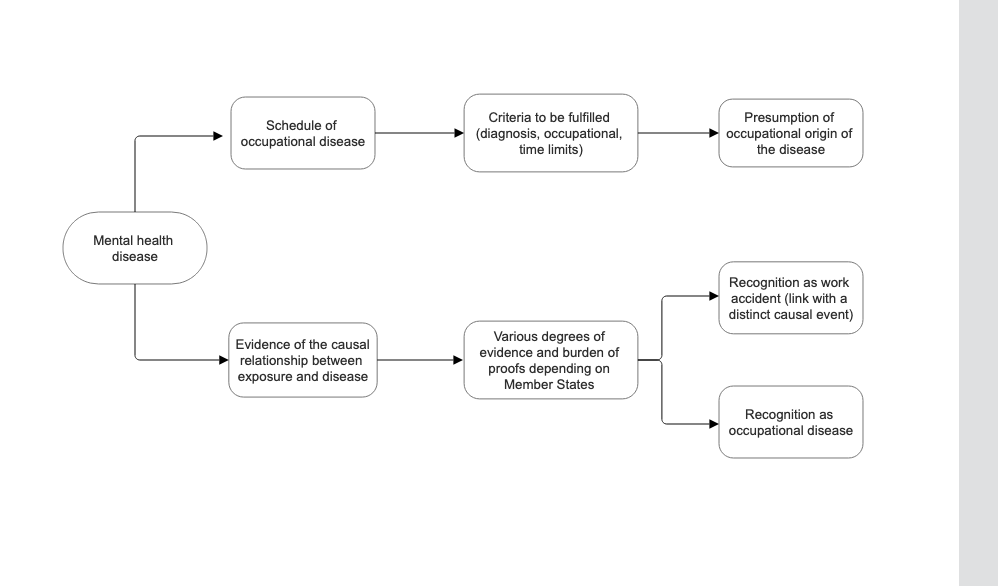
Figure 1. Routes for the recognition of work-related mental health disorders. Authors’ own elaboration.
Schedules of occupational diseases
The procedures for recognising the occupational nature of an accident or a disease vary across the national social security systems. Because an accident usually occurs at a clearly identifiable workplace and/or working hours, it is usually more straightforward to recognise an accident at work than an occupational disease. The development of a disease is more diffuse and progressive and may have multiple causes (e.g. as in the case of depression), therefore the direct link with the workplace is more challenging to establish than in the case of an accident.
A schedule of occupational diseases is a legally defined list of diseases that are recognised as potentially having a work-related origin. Where relevant, it also links these diseases to specific occupations, work activities, processes, or exposures (either through indicative or closed lists). In some cases, the schedule contains time limits for the recognition (time between the end of exposure and the diagnosis of the illness). They facilitate the recognition and compensation (daily allowances, pensions) of diseases for workers and their families.
Schedules of occupational diseases are based on the presumption of a causal link between a clinically attested disease and the occupational exposure to risks at the workplace. If the conditions set out in the schedule (confirmed diagnosis, the worker carried out the listed occupation or activities, request made within time limits for recognition) are met, the illness is presumed to be of occupational origin. This means it can be recognised as an occupational disease without the worker having to provide evidence of the link with their work. Due to multifactorial causes of mental health disorders, establishing a presumption of occupational origin with appropriate criteria is difficult. This partly explains why many national legal frameworks do not incorporate mental health illnesses into their schedules of occupational diseases.[12]
Open, closed and mixed compensation systems for occupational diseases
Most European Member States rely on schedules of occupational diseases, others on open clauses. They can be categorised as follows (closed, open, and mixed system):
- In closed systems only occupational diseases present on a fixed schedule of occupational diseases can be recognised, if the conditions established in the schedule are fulfilled.
- Open systems do not rely on a schedule and allow accident insurance systems to cover any occupational disease if the causal link between occupational exposure and the disease is demonstrated on a case-by-case basis.
- In mixed systems or closed systems with an open clause, schedules of occupational diseases are used but are supplemented by an “off schedule” system for diseases not listed, requiring the worker to provide evidence that the illness was caused by work.
In systems relying on a schedule of occupational diseases, the recognition is facilitated by the presumption established for diseases listed on the schedule, under the condition that mental health disorders are included. In open systems, the burden of proof is higher, usually for the worker, which is particularly true in the case of mental health disorders as they can be multifactorial making the causal link difficult to establish.
International and EU context to the recognition of mental health conditions
International context
The ILO established a framework for the recognition of occupational diseases with the Recommendation No. 194. The ILO Governing Body approved a new list of occupational diseases[13] in 2020 to replace the list annexed to Recommendation No. 194, adopted in 2002. This update is the result of work carried out by a group of experts to adapt ILO recommendations to developments in the identification and recognition of occupational diseases in today’s world. The objective of the ILO’s list of occupational diseases and the approach taken is to highlight the areas and situations where occupational health prevention and protection should apply.
A new item 2.4 on “Mental and behavioural disorders” was added in the list of 2020. Sub-entry 2.4.1 recognises “post-traumatic stress disorder” (PTSD), while the following entry 2.4.2 incorporates “Other mental or behavioural disorders not mentioned in the preceding item [2.4.1] where a direct link is established scientifically, or determined by methods appropriate to national conditions and practice, between the exposure to risk factors arising from work activities and the mental and behavioural disorder(s) contracted by the worker.”[14] The revised ILO list takes a preventive approach but also aims to facilitate reporting by requiring companies to be more vigilant about mental health at work, rather than focusing solely on physical occupational risks. The ILO guidance notes for diagnosis and prevention of the diseases in the ILO List of Occupational Diseases (2022)[15] provides information on the recognition of PTSD as occupational diseases, detailing the causes, occupational exposures, health effects, diagnostic criteria and key actions for prevention.
European Union context
In the EU, according to Article 5(1) of the OSH Framework Directive, “the employer shall have a duty to ensure the safety and health of workers in every aspect related to the work”. This means that employers’ obligations in relation to health and safety cover all aspects of occupational health, including psychosocial risks and mental health at work[16]. Psychosocial risks must be subject to the range of obligations deriving from the Directive, including the conduct of a workplace risk assessment, prevention of risks at the source, or the adaptation of work to workers. While EU OSH law addresses the prevention of mental health risks at work, the recognition for compensation under social security law (i.e. compensation) is more complex.
The Commission Recommendation 2003/670/EC of 19 September 2003 concerning the European schedule of occupational diseases[17] does not include any work-related mental illnesses. However, mental health at work has recently gained importance and visibility at EU level. In 2022, the European Parliament noted the importance of ensuring proper compensation for workers in cases of occupational diseases and called on the Commission to revise the 2003 Commission Recommendation to include work-related mental-health disorders, in particular depression, burnout, anxiety and stress and to transform the Recommendation into a binding Directive[18].
In 2021, the European Commission adopted the EU Strategic Framework on Health and Safety at Work 2021–2027, highlighting the importance of addressing psychosocial risks and mental health at work, particularly in the context of changing work organisation patterns such as remote work, increased connectivity, blurred boundaries between work and private life, and the growing use of information and communication technologies. The Framework announced a review of the EU OSH legal framework, including the Workplace Directive and the Display Screen Equipment Directive, and called on Member States to strengthen the collection and monitoring of data on psychosocial risks and workers' mental health.[19]
The European Commission also announced in 2023 “A comprehensive approach to mental health”, which include direct consideration of mental health at work and psychosocial risks[20]. Finally, on 30 January 2024, the European Commission launched a peer review of existing national legislation in the area of PSR regulation to “map the regulations of all Member States, to understand their strengths and weaknesses and, on this basis, to draw up a strengthened European legislative framework guaranteeing a level playing field throughout the European Union.”[21]
The December 2025 Quality Jobs Roadmap highlights the current efforts to better address psychosocial and ergonomic risks, and mentions the review of the Workplace and Display Screen Equipment Directives and the EU-OSHA Healthy Workplace campaign on mental health and PSRs at work[22].
Challenges in recognising mental health conditions as occupational diseases
Establishing the occupational origin of mental health issues in law and compensation systems presents legal and practical challenges. In particular, due to the multicausality and (usually) gradual onset of mental health conditions, establishing a (primary or exclusive) causal link between exposure and the disease constitutes a significant challenge, if no legal presumption is set in law (cf. schedules of occupational diseases).
In light of this challenge, a number of systems recognise mental health disorders as work accidents considering the more accessible link between work exposure and the health consequences. Mental health conditions are then compensated as occupational accident if it is established that an unexpected, traumatising event of short duration is the main causal event. These are usually acts of violence (armed robbery, assault in the workplace, etc.) or trauma caused by involvement in a traffic accident (during commuting or travel) or toxic organisation of work or else in an accident suffered by a colleague. The mental disorder most commonly identified in these circumstances is PTSD or suicide. Considering this, PTSD stands out among other mental health disorders as being more often recognised by the Member States as an occupational disease, as the causal link between the condition and a specific traumatic exposure or event is more evident.
The finding that it is often necessary to rely on the legal framework for occupational accidents indicates that national insurance systems are not designed to recognise mental health disorders as occupational diseases. A result can be, that the number of recognised mental disorders as occupational diseases is limited compared to physical health conditions in the EU Memebr States[23].
Finally, despite the existence of clear evidence of the links between certain mental health conditions and working conditions, recognising mental health disorders as occupational diseases may pose a significant financial challenge for social security systems. Compensation for occupational accidents and diseases is generally financed through contributions from employers and workers, rather than through the general healthcare system.
Some challenges of recognising mental health conditions as occupational diseases can be overcome via exceptional situations, or judicial decisions. For example, in Germany, despite the absence of legal recognition mechanism, a judicial ruling issued by the Federal Social Court of 22 June 2023 recognised a mental disorder, PTSD, as an occupational disease for the first time. In any event, the recognition is very limited in scope and restricted by the German Social Accident Insurance to the disorder recognised by the Court, and to a specific category of workers (public sector ambulance workers). A similar ruling from 2026 confirmed the approach: A former war graves worker who developed PTSD after years of exhuming and identifying war victims in the Balkan area for a German employer. The German Federal Social Court ruled that PTSD and other psychological disorders can, in principle, be recognised as an occupational disease equivalent (Wie-Berufskrankheit) under § 9(2) of the German Social Security Code VII[24], even if occupation-specific epidemiological studies are lacking. The Court emphasised that the key requirement is a causal link between occupational exposure and the illness rather than scientific evidence for this specific job category to have a higher risk compared to other workers.
The recognition of mental health disorders in the EU Member States as occupational diseases
As part of the broader policy response to mental health conditions, some Member States have opted to recognise their occupational origin. This section focuses on the legal recognition of mental health disorders for compensation purposes. In addition to the legal response, Member States have implemented a range of other activities and actions. The aim of this article is not to provide an overall picture of these activities but rather to outline the different approaches to the legal recognition of mental health conditions as occupational diseases.
Across Member States, the recognition of mental health conditions as work-related varies depending on the legal route available, the level of proof required, and the openness of the national framework. In some systems, such conditions may be recognised as occupational diseases, occupational accidents, or equivalent work-related conditions. In practice, however, recognition often depends on the existence of a presumption of occupational origin, or the worker’s ability to prove a link with work. In certain national legal frameworks, mental health conditions cannot currently be classified as having an occupational origin[25].
Table 1: Categorisation of Member States per type of system for the recognition of occupational diseases| Member State | Type of system | Specifics and relation to PSRs and mental health |
| Austria | Mixed system | Off-list pathologies can be considered occupational if it can be proven, based on reliable scientific knowledge, that the disease is exclusively or predominantly the result of the use of harmful substances (or radiation) in the workplace. - The current version of the list (Annex I to the General Social Security Law) does not include mental health disorders.
|
| Belgium | Mixed system | For the listed diseases, there is no need to demonstrate a causal link between the disease and occupational exposure. For off-list diseases, the applicant must demonstrate the causal relationship between the disease and occupational exposure to the risk causing this disease. - The current version of the list does not include mental health disorders[26].
|
| Bulgaria | Mixed system | An off-list disease may be recognised as an occupational disease if it is found to be primarily and directly caused by the insured victim’s usual occupation, resulting in temporary incapacity, permanent incapacity, or the death of the insured victim. |
| Croatia | Closed system | The Croatian recognition system is based on the Law on the List of Occupational Diseases. The criteria for recognition include the intensity and duration of exposure at a level proven to be harmful to health. The diagnosis must be confirmed through treatment programmes accepted in occupational medicine, and the diagnostic procedure must include a number of considerations. For each listed disease, the tasks or jobs considered to cause the disease are specified. - The list does not include mental health disorders.
|
| Cyprus | Mixed system / other | A distinction is made between notifiable and recognisable diseases. Notifiable diseases are listed for prevention purposes. Recognisable diseases are broader in scope, encompassing any occupational disease or work-related disease, regardless of whether it is included in the national list. A disease is considered recognisable if the examining physician establishes a direct link between the disease and the person’s occupation. |
| Czechia | Closed system | The listed diseases are recognised as occupational by the competent authority on the condition that all the following criteria are fulfilled: clinical diagnosis objectively established, and severity exceeds the prescribed minimum level; alternative, non-occupational origins excluded; the affected person worked in an environment and under conditions that, according to current medical knowledge, can cause the development of the disease (including criteria for the duration and intensity of exposure). |
| Denmark | Mixed system | The national list of occupational diseases comprises diseases where there is well-established medical evidence of a causal link between specific working conditions (exposure) and the development of a particular disease. Recognition may be possible under the complementary system if the disease is likely to have been caused, beyond reasonable doubt, by a specific working condition. - Two mental disorders are included in the Danish occupational-disease list.
|
| Estonia | Open list system | The Estonian list of occupational diseases is open, allowing any disease to be reported, and has been aligned with the International Statistical Classification of Diseases and Related Health Problem. The list includes “occupational diseases caused by physical and physiological hazards in the work environment.” - The Estonian list include 1) post-traumatic stress disorder; and 2) other diseases caused by psycho-social agents in the working environment.[27]
|
| Finland | Open system or mixed system | The Ordinance of occupational diseases provides a non-exhaustive list of causative agents and related occupational diseases, serving as a guide for those processing recognition claims. Compensation can be granted for diseases not on the list if they can be sufficiently linked to an agent as specified in the Worker’s Compensation Act. For a disease to be classified as an occupational disease, occupational exposure must be the primary cause. If it is merely one of several contributing factors, the disease is classified as a work-related disease. The Worker’s Compensation Act states that only diseases caused by physical, chemical, and biological agents can be deemed occupational diseases. - As a result, diseases caused by psychosocial risks are not recognised as occupational diseases.
|
| France | Mixed system | Legally established tables of occupational diseases (100+ tables) identify the diseases that can be recognised and attribute a presumption of occupational origin – the link between the disease and work is legally established. A complementary system allows the recognition of diseases not listed in the tables or those that don’t meet all required conditions, if it is essentially and directly cause by the victim’s usual work and results in death or “foreseeable permanent incapacity” (notion specifically created to facilitate the examination of mental health disorders) of at least 25%. - The list of occupational diseases does not include mental health conditions. They can be recognised via the off-list route.
|
Germany (not EODS) | Mixed system | A list of the occupational diseases currently eligible for recognition can be found in Annex 1 to the Ordinance on Occupational Diseases. Should a disease not be listed as an occupational disease in Annex 1 to the Ordinance on Occupational Diseases, it may be possible in individual cases for it to be recognised as if it were an occupational disease. The “occupational disease equivalent” clause lets a non-listed disease be treated like an occupational disease only in exceptional circumstances (i.e. if medical science has arrived at new findings that could justify the disease’s addition to the list of occupational diseases). - No mental health conditions are currently included in this list of occupational diseases[28].
- For PTSD a recognition as work accident is possible if specific conditions are fulfilled.
|
Greece (not EODS) | Closed list system | Recognition is based on a national occupational-disease list, organised around diseases caused by chemical agents, skin agents, inhaled substances, infectious/parasitic agents, and physical agents. A new ministerial decision setting the national list and recognition criteria in line with Commission Recommendation 2022/2337 is to be adopted. - Mental health disorders do not appear listed on the list of occupational diseases.[29]
|
| Hungary | Open list system | The Hungarian list of occupational diseases is open and generic, allowing any disease to be reported. The list is aligned with the EU schedule of occupational diseases. It includes a category for non-optimal workload, psychosocial, and ergonomic factors. - The recognition of mental health conditions as occupational diseases occurs on a case-by-case basis.
|
| Ireland | Closed list system | The list identifies the diseases that are liable to be recognised, associated exposure factors, and associated occupations. If criteria are fulfilled, a legal presumption of occupational origin is established. Mental health disorders are not currently included within the schedule of prescribed occupational diseases. |
| Italy | Mixed system | A list of diseases is used to identify those that can be recognised. The current list has evidenced, for each risk agent, the specific occupational pathologies that can be expected. This list provides a legal presumption of professional origin. A complementary system allows for the recognition of off-list diseases, provided that the victim can demonstrate a link between the disease and their job. Under the complementary system, it is possible to recognise off-list diseases or diseases that do not meet the criteria outlined in the occupational diseases table. |
| Latvia | Closed list system | Only diseases listed in the national list of occupational diseases can be recognised as occupational diseases. - The list does not include a specific category for mental health disorders, but it includes burnout syndrome as a recognised occupational disease.
Generally occupational diseases are defined as caused by physical, chemical hygienic, biological and psychological factors in the working environment. Off-list diseases cannot be recognised, except in rare cases. |
| Lithuania | Closed list system | Only diseases listed in the national list of occupational diseases can be recognised as occupational diseases. Recommended recognition criteria are established. |
| Luxembourg | Mixed system | For listed diseases, the occupational nature is recognised if the insured person can prove exposure to a specific risk that could be the determining cause of the disease. - The list does not include mental health disorders.
For off-list diseases, the insured person must also demonstrate a causal link between the occupational risk and the disease, with a probability approaching certainty. A mere possibility of such a causal relationship is not enough. |
| Malta | Mixed system | A national list of diseases that identifies diseases eligible for recognition and compensation as occupational diseases, as well as causal agents and the nature of the occupation. The Department of Social Security can also recognise additional diseases as being occupational in nature. For diseases with multifactorial causes, the authorities rely on the occupational history and further medical examinations and investigations to determine the occupational nature of the disease. |
| Netherlands | Open system | There is no exhaustive or predefined list of occupational diseases in the Netherlands. A disease or condition may be considered an occupational disease when it is caused predominantly by exposures or circumstances arising from work. This assessment is made by an occupational physician using professional guidelines and evidence-based criteria. The Netherlands Centre for Occupational Diseases (NCOD) supports this process through a structured six-step approach for the diagnosis, assessment, reporting and prevention of occupational diseases. The Ministry of Social Affairs and Employment explicitly recognises that any disease or condition meeting the definition of an occupational disease may qualify as such, including mental health disorders where a sufficient causal relationship with work can be established[30]. |
| Poland | Closed list system | A listed disease is recognised as occupational if it can be indisputably or with high probability attributed to harmful health factors in the work environment or related to the manner of performing work. |
Portugal (not EODS) | Mixed system | Occupational diseases are included in the list published in the Official Gazette. Diseases not included in the list such as bodily injury, functional disturbance or illness are compensable provided it proves to be a necessary and a direct consequence of the activity carried out and does not represent normal wear and tear on the body.[31] Mental health disorders are currently not specifically included in the list of occupational diseases, however, in principle, they can be recognised under the off-list route, if evidence of the causal relationship with work is provided. Portuguese law recognises that occupational accident may lead to psychological or psychiatric harm, and caselaw was established on a number of consequences, in particular PTSD. |
| Romania | Closed list system | Romania’s recognition system for occupational diseases is based on a fixed list of diseases and exposure factors for which reporting is compulsory. The investigation of reported occupational diseases is conducted on a case-by-case basis. Two occupational pathologies are recognised as occupational mental and behavioral disorders: 1. Post traumatic stress disorder caused by skull-cerebral trauma due to a work accident and 2. Post traumatic stress disorder caused by exposure to (also long-term) situations at the workplace (e.g. exceptionally stressful situations or events at work). For both there is a maximum limit of two years from the cessation of exposure to the moment of recognition. If there are more than two years from trauma or event to diagnostic the law establishes that this cannot be recognised as an occupational disease.
|
| Slovakia | Mixed system | The Slovak system is based on a schedule of the diseases under consideration and the conditions necessary for their recognition as occupational diseases (Act No. 461/2003 Coll. on Social Insurance). The list comprises 47 items. The 47th item is defined as ‘Other work-related health impairment’, i.e. neither occupational accidents nor standard occupational diseases. Item 47 covers health impairments that may arise in the course of work where a causal relationship between the work performed and the identified health impairment can be demonstrably established to an extent comparable to that of other occupational diseases listed in the schedule. A disease is recognised as occupational if it is objectively diagnosed, if non-occupational causes are excluded, and if a causal link according to current medical knowledge between working conditions exposure and the onset or progression is established. |
| Slovenia | Closed list system | Only diseases listed in the national list can be recognised as occupational diseases. The national list of occupational diseases specifies both the diseases and the harmful factors that may affect workers’ health, but there is no legal presumption of occupational origin for diseases. Each case requires verification of the diagnosis and its occupational origin. |
| Spain | Closed list system | The Spanish recognition procedure is based on a list system, where an occupational disease can only be legally recognised if it is listed. However, diseases that are not included in the official list but are nonetheless related to the victim’s job activities can be recognised as a special category of work-related accident, specifically as "non-traumatic pathologies". The list is associated with a legal presumption of occupational origin, if all the criteria listed are met. - The National Institute on Occupational Health and Safety specifies that mental disorders are diseases classified as mental or behavioural disorders, caused or made worse by work. For social security purposes, they are considered work accidents[32].
|
| Sweden | Open system | Claims are assessed on a case-by-case basis. The victim must provide detailed information to establish a link between their disease and their occupation. There must be compelling reasons to attribute the disease to occupational causes than to other factors. Only cases for which workers are eligible for individual life annuity are examined. - Sweden recognises mental disorders both as accidents at work and as occupational diseases.
|
Sources: Eurostat, European Occupational Diseases Statistics (EODS) - Methodological notes[33].
In Austria and Belgium, PSR-related illnesses, such as burn-out and stress-induced disorders, are excluded from the schedule of occupational diseases[34]. As in France, in Belgium, a psychological shock can be recognised as an occupational accident. Recognition requires the event causing the shock to be identified sufficiently precisely in time and place, that it be of a sudden nature and that it takes place in a short lapse of time.
In Croatia, occupational diseases are conditions directly caused by workplace hazards, primarily physical, chemical or biological factors. PSR-related illnesses fall under the broader category of work-related diseases and are not eligible for compensation. While acute stress reactions from workplace incidents may qualify as an occupational accident, chronic mental health conditions are excluded unless tied to physical factors[35].
Denmark lists two mental health conditions on its schedule of occupational diseases (PTSD and returned servicemen’s depression), based on scientific research. It is the only EU Member State to have specific mental health conditions mentioned in the list of occupational diseases in a closed system. In addition, off-list recognition is possible if the illness is exclusively or predominantly caused by the nature of the work and a causal link between risk factors and the illness have been proved to be probable[36]. PTSD can be recognised as an occupational accident if the exposure lasted at most five days. In practice, this exposure often involved violence or threats, but it could also involve physical injuries which caused psychological damage.
In Estonia, PSR were included in 2022 in the official list of factors at work that can cause an occupational disease, recognising conditions like PTSD and other illnesses in its official schedule of occupational diseases. However, it needs to be taken into account that the Estonian system is characterised as open. Official statistics from the Labour Inspectorate reveal that only one occupational disease caused by PSRs was officially recorded in 2023, alongside a small number of work-related diseases, highlighting the broader difficulty of diagnosing mental health conditions despite the legal basis[37].
In France’s mixed system, the off-schedule recognition procedure for occupational diseases means that the burden of proof weighs on the worker (although, de facto, in cooperation with the insurer’s investigating officer) and a high level of evidence is required about the causal link between occupational exposure and the occurrence of the disease. In addition, the legislation requires a minimum level of foreseeable permanent incapacity rate of 25% to open an investigation under the off-schedule system. The rate was lowered in 2002 from 66% to facilitate the use of the off-board recognition procedure for mental health disorders. The loosening of the conditions for access to the off-list recognition led to a continuous upward trend in claims and actually recognised cases. The number of psychological conditions recognised as occupational diseases went from around a hundred in 2010 to more than 1500 in 2021[38].
Many mental health conditions are also recognised as occupational accidents. They are described as such on the initial medical certificate drawn up by a doctor or in the occupational accident report drawn up by the employer, in which the facts described are assimilated to those of psychological disorders. In line with established caselaw confirming that psychological as well as physical injury can qualify as a work accident, the French Court of Cassation recently confirmed that a psychological shock suffered during a work-related meeting (which incidentally led to depression) is presumed to be an occupational accident[39].
In Italy mental disorders can be recognised as occupational diseases even when the worker is only suffering a temporary disability. In rare cases, mental disorders are also recognised as occupational accidents.
In Spain, diseases not included in the list of occupational diseases can be recognised as a special category of work-related accident, i.e. non-traumatic conditions caused by work. Non-traumatic conditions are illnesses not included in the schedule of occupational diseases and which are classified as work-related accidents for Social Security coverage purposes. The psychological harm recognised as occupational accidents are due to assaults or threats. Mental disorders can be recognised as occupational diseases even when the worker is only suffering a temporary disability.The 2025 Roadmap of the Ministry of Health on work and mental health aimed at general healthcare professionals supporting insights into the links of mental disorders with work accident or occupational diseases encourages screening, allowing general practitioners to report the suspected occupational origin of mental health disorders. It sets out clinical criteria for the attribution and reporting: 1) recognition of the existence of a mental disorder clinically recognisable on the basis of the ICD classification, 2) existence of potentially damaging working conditions (exposure to psychosocial risks), 3) chronological relationship between the exposure and the symptoms; 4) criterion of clinical consistency: attribution of the mental health disorders to the occupational risks to avoid automatic recognition.[40]
Sweden established an open system based on evidence brought on a case-by-case basis for occupational diseases[41]. It recognises mental disorders both as accidents at work and as occupational diseases[42]. Claims are investigated where permanent disability or a loss of income is involved.
In Germany, post-traumatic stress disorder (PTSD) and depression resulting from high job strain are currently being discussed by the Medical Expert Advisory Board on Occupational Diseases (Ärztlicher Sachverständigenbeirat Berufskrankheiten, ÄSVB)[43]. The Board is currently reviewing the scientific evidence on these conditions and their possible relationship to occupational exposure as part of its ongoing deliberations. The ÄSVB is an independent scientific advisory body that advises the German Federal Ministry of Labour and Social Affairs (BMAS) on occupational diseases. Its main task is to review and evaluate the scientific evidence on whether a disease should be added to, or an existing disease updated in, Germany’s official list of occupational diseases. Based on this assessment, the Board issues scientific recommendations and opinions to the Ministry. These recommendations form the scientific basis for government decisions on the inclusion of new diseases in the Occupational Diseases Ordinance and are also relevant for the recognition of occupational diseases in individual cases by the statutory accident insurance institutions.
The specific case of suicide as work accidents
In several Member States, social security systems and courts have gradually recognised cases of suicide or suicide attempts as work accidents. According to EUROGIP, the recognition depends on the definition of an occupational accident in the national legal order, and the reasoning developed by the case law in each country. The main difficulty for the qualification as ‘accident’ is the voluntary and intentional character of the act of committing suicide, contrasting with the unpredictable and exogenous nature of accidents[44]. As a result, only a few cases of work-related suicides or suicide attempts are recognised as work accidents.
In Spain, suicide can be recognised as an occupational accident under two conditions: (i) the worker must not have acted rationally and intentionally, i.e. the suicide must be the final stage of a process of alienation and must be the result of pathological or depressive processes that involve an alteration of the subject’s judgement and decision-making (it is essential that there is a prior psychopathology or state of mental alteration that leads the subject to self-harm); (ii) there is a cause-and-effect relationship between the worker’s working conditions and the emotional state that led to the decision to commit suicide[45]. The suicide must be the result of intense work-related stress that significantly impairs the worker’s mental capacity. In such cases, the presence of an overwhelming or irresistible force may mean the act is not considered fully voluntary or intentional.
Since the concept of an accident implies an involuntary element, suicide is not, in principle, considered as an occupational accident in Germany. However, if circumstances within the workplace contributed significantly to the victim no longer having full control over their actions, or if these circumstances were a major factor in the decision to commit suicide, suicide may be considered an indirect consequence of an accident at work or an occupational illness. This may include suicides of workers suffering from conditions such as nervous depression due to the permanent after-effects of an accident or severe persistent pain, but also victims of purely psychological disorders.
In Italy, recognition is only possible when the suicide is caused by an event itself classified as a work accident or an occupational disease, e.g. work-related stress conditions such as work overload or harassment that have been recognised as having an occupational origin.
In France, suicide is treated as an occupational accident if it occurs during working hours and at the workplace. In this case, suicide or suicide attempt is presumed to be work-related, except if the employer shows that the suicide is not (e.g. for personal reasons only). If the suicide or suicide attempt did not occur during working hours or at the workplace, it is up to the victim or their family to prove the link with work. In addition, gross negligence (“faute inexcusable”) can be recognised when the employer was or should have been aware of the danger to which the employee was exposed and did not take the necessary measures to protect them. Gross negligence is a serious violation of employers’ obligation and can override the presumption rules. For instance, the gross negligence has been recognised for a worker who had attempted suicide at home while on sick leave[46]. It opens the right to the family to get a full compensation of the damage.
In Belgium, suicide may be considered as an occupational accident if there is a link with the performance of the employment contract, rather than during working hours / at the workplace. The employee (or their relatives) shall provide convincing evidence of three elements: a sudden event, an injury, and the fact that the accident occurred in the course of work. Once this proof has been conclusively established, two legal presumptions apply: that of causality and that of the accident occurring in the course of performing duties. The employer or occupational service may refute the presumption if evidence is provided.
In The Netherlands, there is no established legal doctrine under which suicide is generally recognised as a work accident. Cases involving work-related suicide are more commonly assessed through the concepts of occupational disease, employer duty of care and employer liability. Mental disorders such as PTSD, burnout or other work-related psychological conditions may be recognised as occupational diseases where a sufficient causal relationship with work can be established.
Portugal neither considers suicide a work accident. In 2010, the Supreme Court found that the causal link between an accident at work and depressive condition on the one hand and the subsequent suicide of the worker on the other hand, was not established[47].
In Slovakia, suicide at work is not classified as either an occupational accident or an occupational disease. It is not considered a work accident, as the act of suicide is not independent from the workers’ will, as required by the Labour Code’s definition, and is categorised as intentional as per ICD-10. For a suicide to be recognised under the open clause of Slovak legislation, the psychological pressure or burnout must be exclusively or predominantely caused by work, and non-professional influences must be completely excluded.
Conclusion
The main challenge in recognising mental health disorders as occupational diseases is their multi-causal nature. Because these conditions often have several contributing factors, they are usually treated within general healthcare systems rather than occupational medicine and are less often attributed to work. This also explains why Member States generally do not include mental health disorders in their official schedules of occupational diseases. Instead, they rely on off-schedule procedures or, in some cases, recognition as an occupational accident. A key criterion in these assessments is whether work played an essential role in the development of the mental health disorder.
PTSD and suicide seem to stand out, since the relation between the disease and the workplace may be easier to establish. Thus, several Member States recognise PTSD, either as the consequence of a workplace accident or as an occupational disease. With regard to suicide, a number of Member States have specific legal provisions or case law, but the legal approaches and the rationale underpinning them differ considerably.
Policymakers, employers and social partners increasingly need to recognise that work can contribute to the development of mental health conditions and reflect this in the way work-related mental health conditions are managed. In this regard, the structure of national statistical data on accidents at work and occupational diseases makes it harder to capture mental health conditions and suicide in occupational accident and disease statistics.


