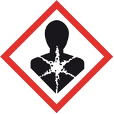
Allergens are substances that may cause a hypersensitivity (allergy) of the immune system. After acquiring this hypersensitivity, further exposure to the same substance may result in allergic skin disease such as allergic contact dermatitis, or allergic airway disease such as allergic rhinitis or asthma. Occupational allergens are present in many sectors and occupations. Occupational allergens and the products containing them may be identified by means of their classification and labelling as well as by using various existing lists. Prevention should include combinations of measures at source, technical and organisational measures, personal protection and hygiene, and early warning.
Allergens – or ‘sensitisers’ – are substances that may cause a hypersensitivity (allergy) of the immune system. An allergy develops in two phases. First, the immune system acquires a hypersensitivity (gets sensitised) as a result of exposure to the allergen. At each subsequent contact with the same substance an abnormally strong immune response occurs, which may result in allergic disease such as allergic contact dermatitis (eczema) or allergic asthma. Occupational allergens are those allergens to which exposure at work may occur – as distinguished from e.g. food allergens. Well-known examples of occupational allergens are:
The health effects that occupational allergens cause may force workers to leave their profession. An allergic reaction may develop within weeks after the first time of exposure. However, it may take years as well. This depends on the intensity of exposure, the personal sensitivity of the person exposed and the strength of the allergen (its sensitising potential). Not everybody will develop an allergy upon exposure. However, everybody is in chance of getting sensitised. The most significant health effects of occupational allergens include contact dermatitis, rhinitis and occupational asthma.
Contact dermatitis – also called eczema – is an inflammation of the skin which may result in rashes (redness), itch or pain, nodules, vesicles (blisters), scaling, thickened skin and in severe cases fissures. Generally, the symptoms of allergic contact dermatitis are quite similar to those of irritant contact dermatitis. Only testing for allergy may distinguish between the two. However, the chance of acquiring an allergic contact dermatitis is greatly increased when irritant contact dermatitis already exists. Treatment of contact dermatitis is difficult, which is why it often develops into a chronic skin condition. Eczema may hamper social intercourse, as well as the performance of manual tasks.
Rhinitis is an inflammation of the nose, which may be caused by irritants or allergens. Rhinitis often precedes the development of allergic asthma.
Asthma is a disease of the airways, leading to periodic narrowing of the airways, and an increased sensitivity to all kinds of non-specific stimuli.
Symptoms of asthma include difficulty in breathing, tightness of chest and cough. Asthma is a serious disease that may be life-threatening. Asthma may be related to work in two ways:
In most cases, occupational asthma is caused by allergens. However, irritant-induced asthma exists as well.
In some cases, workers may develop skin disease after being sensitised as a result of exposure through the airways. Reversely, workers may develop allergic rhinitis or asthma after being sensitised after dermal exposure. Such cross reactions may occur for example upon exposure to isocyanates in paints or adhesives, or to (powdered) latex gloves.
Several hundreds of occupational allergens are known. Exposure to allergens may occur in a lot of sectors of the economy, and in many different occupations. In some cases, consumers may get in contact with similar allergens as those encountered at the workplace, e.g. by using cleaning products or cosmetics. A number of major professions at risk are indicated in tables 1[1] [2] [3]& 2[2] [4] [5].
Table 1: Professions at risk of skin effects (contact dermatitis) caused by occupational allergens

Table 2: Professions at risk of airway effects (occupational asthma, rhinitis) caused by occupational allergens

The employer should describe potential risks caused by occupational allergens in the risk assessment. Occupational health preventive services may support the employer in the process.
First of all, occupational allergens have to be recognised. Subsequently, risk assessment tools and monitoring may be applied.
One has to be aware of the fact that irritating factors at the workplace may enhance the impact of allergens. In case of exposure of the airways, irritant stimuli such as welding fume, diesel motor exhaust or tobacco smoke may increase the airways’ susceptibility to allergens. In case of dermal exposure, ‘wet work’ is a particularly relevant factor. Frequent or prolonged exposure of the skin to water may weaken the skin’s barrier function, and may in fact result in the development of contact dermatitis on its own. Upon subsequent exposure to allergens, the chances of getting sensitised will be increased. Wet work is a relevant factor in many professions, including cleaning personnel, nurses, hairdressers and food and catering workers. Irritant substances present in e.g. cleaning agents may add to diminishing the skin’s barrier function.
Allergens at the workplace may be recognised by means of their classification and labelling.
Table 3 provides the hazard symbols and risk-phrases or hazard-statements by which allergens may be recognised on the labels or in the Safety Data Sheets (SDS) of substances or products[6]. In addition to chemicals labelled as allergen, it is important to consider allergens that may be generated in the workplace such as wood dust[7] and biological agents such as organic dust, fungal allergens (e.g. Aspergillus)[8] [9]. An overview of biological allergens is available in the EU-OSHA report on biological agents and work-related diseases[8].
Table 3: Classification and labelling of occupational allergens (CLP Regulation 1272/2008/EC)6[6]
Hazard symbols | 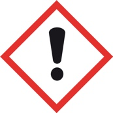
|
| Hazard statements | H317 May cause an allergic skin reaction H334 May cause allergy or asthma symptoms or breathing difficulties if inhaled |
As soon as the potential allergens at the workplace have been identified one may proceed with exposure assessment and risk assessment using one of the available risk assessment tools and/or monitoring at the workplace. Well-known risk assessment tools include COSHH-Essentials in the UK[10], the German EMKG[11] and Stoffenmanager (Dutch and English versions)[12].
In case of exposure by inhalation, the exposure may be assessed against an available Occupational Exposure Limit (OEL). However, in case of respiratory allergens the derivation and use of OELs brings about specific problems because there is no clearly defined "safe" exposure level below which adverse effects, such as sensitisation, do not occur[13] [14] [15]. Once a worker becomes sensitized to a respiratory allergen, even extremely low levels of exposure can trigger severe reactions, such as asthma. This makes it difficult to establish a limit that protects all workers, particularly those who may develop hypersensitivity over time. Furthermore, respiratory allergens often lead to cumulative effects, meaning symptoms may develop only after prolonged exposure, or the allergic response may appear weeks, months, or even years after initial sensitisation[15].
OELs for local effects to the skin do not exist. However, binding lists of OELs of the Chemical Agents Directive (98/24/EC)[16] and of the Carcinogens, mutagens or reprotoxic substances at work Directive (2004/37/EC)[17] provide notices of sensitising effects where applicable. Basically, the general rule should be to limit skin and respiratory exposure to allergens as much as possible.
The European Framework Directive on Safety and Health at Work 89/391/EEC requires that employers assess hazards and risks at the workplace and take measures to control exposure where needed[18]. Furthermore, the Chemical Agents Directive [16] includes guidelines for risk assessment. There are no specific EU-wide regulations to the group of ‘allergens’ as a whole. However, the Cosmetics Directive Regulation 2009/1223/EC[19] contains restrictions on the use of allergens in cosmetic products and specific labelling requirements.
The European Framework Directive on Safety and Health at Work 89/391/EEC prescribes a hierarchy of control measures, which has been adopted by all member states[18]. Preferably, measures to control exposure and prevent health effects caused by substances should be taken at source. If this is not possible, one may take technical or organisational measures or, as a last resort, use personal protection. Some examples that are specific to allergens are mentioned below.
Employers may try to make the use of allergens unnecessary. E.g., in concrete repair, in many cases cement-based products perform even better than products that contain both cement and epoxy resins.
One may also try to substitute allergens by less harmful substances. In the hairdressers’ trade, the so-called ‘acid’ permanent waving fluid (glyceryl thioglycolate) can be substituted by the less sensitising ammonium thioglycolate. Latex gloves may be substituted by nitrile gloves. Isocyanate monomers in polyurethane-based coatings have been partly substituted by oligomers which are less volatile and less sensitising. Substitution by products that reduce exposure may be possible as well, e.g. low-chromium cement, or less volatile hardeners (amines) for epoxy-based adhesives.
In some cases, the supplier may adapt the form or packaging of the product. E.g., less dusty hair-whitening powder (persulfate), coated enzymes in the detergent industry or a type of packaging for 2-pack adhesives that allows for mixing inside the package.
General ventilation and local exhaust ventilation (LEV) may be effective in case of allergens. Examples include spraying booths for (e.g.) isocyanate-containing coatings, ventilated cabins for the preparation of medical drugs, and working tables with downdraft LEV for nail technicians.
If automation is not possible, specific tools and equipment may still reduce exposure, such as closed mixing vessels for 2-pack products, splash guards for paint rollers when sensitising epoxy or polyurethane products are used, spatula that facilitate a smooth application of sealants and prevent the worker from using his fingers, and paint spraying guns that reduce ‘overspray’ (e.g. the High Volume Low Pressure or Air mix types of spray guns).
Separation of certain activities, and restricted access, may reduce exposure. E.g. the hairdressing trade has defined guidelines for establishing separated areas for mixing hair colourants etc. Vegetable growers that apply living biologic pest control such as mites, may close the zone for other workers at moments at which the mites are dispersed. Floor layers that use allergenic two-pack flooring products based on epoxy or polyurethane resins may demarcate the mixing area, in order to limit the number of workers that are potentially exposed to sensitising epoxy resin, amine hardeners or isocyanate hardeners.
PPE may only be used when other measures are not sufficiently effective or not possible. One may consult the SDS in order to select the proper personal protective equipment (PPE). In order to prevent inhalation of solid allergens, filtering facepieces may be sufficient in less demanding cases. Depending on the specific substance and process, more advanced options including full-face air-supplied respirators may be needed. The use of respirators may be too burdensome for workers who already suffer from asthma.
Regarding skin protection: consult the SDS in order to select proper gloves. In any case, leather, cotton and polyethylene gloves are generally not suitable, just like gloves that contain allergens, such as latex. Furthermore:
It is advisable to use a skin care cream before work starts, every time after washing the hands, and after work.
Furthermore, it is advisable to draw up a skin protection plan, especially in professions with known skin problems (e.g. cleaners, hairdressers, construction, food manufacturing). Include measures and instructions for:
taking into account:
Measures should also address wet work.
Early detection of skin abnormalities or airway complaints may prevent the development of more severe complaints such as allergic contact dermatitis or asthma. Irritant contact dermatitis may enhance the penetration of allergens through the skin, increasing the chance at acquiring an allergic contact dermatitis. One may use:
In order to facilitate early detection of skin disease, so-called ‘pictionnaire’ questionnaires have been developed, which use photos of affected skin[20].
After finding cases of sensitisation, skin or airway disease, the effectiveness of control measures in place should be evaluated again. Reporting schemes within the company – in addition to any reporting obligation to national occupational disease registries – may increase the companies’ capacity to trace defects in the risk management measures in place.
[1] EU-OSHA – European Agency for Safety and Health at Work. Skin sensitisers. Factsheet 40, 2003. Available at: https://osha.europa.eu/en/publications/factsheet-40-skin-sensitisers
[2] EU-OSHA – European Agency for Safety and Health at Work, De Craecker, W., Roskams, N., Op de Beeck, R. Occupational skin diseases and dermal exposures in the European Union (EU-25): policies and practice overview. Report, 2008. Available at: https://osha.europa.eu/en/publications/report-skin-diseases-and-dermal-exposure-policy-and-practice-overview
[3] HSE – Health and Safety Executive, Skin at work. Available at: https://www.hse.gov.uk/skin/
[4] Chew, A. L. & H. I. Maibach, Occupational issues of irritant contact dermatitis, Int. Arch. Occup. Environ. Health, vol. 76, 2003, pp. 339-346.
[5] EU-OSHA – European Agency for Safety and Health at Work. Respiratory sensitisers. Factsheet 39, 2003. Available at: https://osha.europa.eu/en/publications/factsheet-39-respiratory-sensitisers
[6] Regulation (EC) No 1272/2008 of the European Parliament and of the Council of 16 December 2008 on classification, labelling and packaging of substances and mixtures, amending and repealing Directives 67/548/EEC and 1999/45/EC, and amending Regulation (EC) No 1907/2006. Available at: https://osha.europa.eu/en/legislation/directive/regulation-ec-no-12722008-classification-labelling-and-packaging-substances
[7]Dalbøge, A., Albert Kolstad, H., Ulrik, C. S., Sherson, D. L., Meyer, H. W., Ebbehøj, N., ... & Schlünssen, V. (2023). The relationship between potential occupational sensitizing exposures and asthma: an overview of systematic reviews. Annals of work exposures and health, 67(2), 163-181.
[8] EU-OSHA - European Agency for Safety and Health at Work, Biological agents and work-related diseases: results of a literature review, expert survey and analysis of monitoring systems, Available at: https://osha.europa.eu/en/publications/biological-agents-and-work-related-diseases-results-literature-review-expert-survey-and/view
[9] Sabino, R., Veríssimo, C., Viegas, C., Viegas, S., Brandão, J., Alves-Correia, M., ... & Richardson, M. (2019). The role of occupational Aspergillus exposure in the development of diseases. Medical mycology, 57(Supplement_2), S196-S205.
[10] HSE - Health and Safety Executive. Control of Substances Hazardous to Health (COSHH). Available at: https://www.hse.gov.uk/coshh/
[11] BAuA – Bundesanstalt für Arbeitsschutz und Arbeitsmedizin. Leitfäden zum Einfachen Maßnahmenkonzept Gefahrstoffe (EMKG). Available at: https://www.baua.de/DE/Themen/Chemikalien-Biostoffe/Gefahrstoffe/EMKG/Leitfaeden
[12] Stoffenmanager. Available at: https://www.stoffenmanager.nl/en/
[13] Topping, M., 2001, Occupational exposure limits for chemicals, Occup. Environ. Med., vol. 58, pp. 138-144, available at: http://www.ncbi.nlm.nih.gov/pmc/articles/PMC1740099/pdf/v058p00138.pdf
[14] Health Council of The Netherlands, 2008, Prevention of work-related airway allergies. Recommended occupational exposure limits and periodic screening, The Hague, Health Council of The Netherlands, publication no. 2008/03. Available at: https://www.healthcouncil.nl/documents/advisory-reports/2008/03/13/prevention-of-work-related-airway-allergies
[15] Dotson, G. S., Maier, A., Siegel, P. D., Anderson, S. E., Green, B. J., Stefaniak, A. B., ... & Kimber, I. (2015). Setting occupational exposure limits for chemical allergens—Understanding the challenges. Journal of occupational and environmental hygiene, 12(sup1), S82-S98.
[16] Council Directive 98/24/EC of 7 April 1998 on the protection of the health and safety of workers from the risks related to chemical agents at work (fourteenth individual Directive within the meaning of Article 16(1) of Directive 89/391/EEC). Available at: https://osha.europa.eu/en/legislation/directive/directive-9824ec-risks-related-chemical-agents-work
[17] Directive 2004/37/EC of the European Parliament and of the Council of 29 April 2004 on the protection of workers from the risks related to exposure to carcinogens, mutagens or reprotoxic substances at work (Sixth individual Directive within the meaning of Article 16(1) of Council Directive 89/391/EEC). Available at: https://osha.europa.eu/en/legislation/directive/directive-200437ec-carcinogens-or-mutagens-work
[18] Council Directive 89/391/EEC of 12 June 1989 on the introduction of measures to encourage improvements in the safety and health of workers at work. Available at: https://osha.europa.eu/en/legislation/directives/the-osh-framework-directive/1
[19] Regulation (EC) No 1223/2009 of the European Parliament and of the Council of 30 November 2009 on cosmetic products (recast). Available at: http://data.europa.eu/eli/reg/2009/1223/2024-04-24
[20] Coenraads P. J., Van der Walle, H., Thestrup-Pedersen, H., Rudzicka, T., Dreno, B., De La Loge, C., Viala, M., Querner, S., Brown, T., Zultak, M. Construction and validation of a photographic guide for assessing severity of chronic hand dermatitis, British Journal of Dermatology, vol. 152, 2005, pp. 296-301.
EU-OSHA – European Agency for Safety and Health at Work, Practical tools and guidance on dangerous substances. Available at: https://osha.europa.eu/en/themes/dangerous-substances/practical-tools-dangerous-substances
EU-OSHA – European Agency for Safety and Health at Work. Practical tools and guidance on dangerous substances. Available at: https://osha.europa.eu/en/themes/dangerous-substances/practical-tools-dangerous-substances
EU-OSHA – European Agency for Safety and Health at Work. Risk assessment for hairdressers. E-Facts 34, 2008. Available at: https://osha.europa.eu/en/publications/e-fact-34-risk-assessment-hairdressers
EU-OSHA – European Agency for Safety and Health at Work. Risk assessment for care workers. E-Facts 35, 2008. Available at: https://osha.europa.eu/en/publications/e-fact-35-risk-assessment-care-workers
EU-OSHA – European Agency for Safety and Health at Work. Cleaners and dangerous substances. E-Facts 41, 2008. Available at: http://osha.europa.eu/en/publications/e-facts/efact41/view
HSE – Health and Safety Executive. List of substances that can cause occupational asthma. Available at: https://www.hse.gov.uk/asthma/substances.htm
Tema seçin