Products based on epoxy resins as a binder have become popular in various settings, among which the construction industry and in windmill blade production, as a result of their excellent technical properties. However, due to the same properties epoxy products are a notorious cause of allergic skin disease among workers. In addition, constituents of epoxy products may cause airway and eye irritation, and airway allergies or even more serious diseases such as cancers or diseases of the reproductive system. Epoxy products that contain volatile solvents may give rise to neurotoxic effects. This article focuses on the use phase of epoxy products, and describes the various types of epoxy products, areas of application, health hazards, professions at risk, developments in the composition and risks of products, the development of classification systems to assess these risks, and control measures, following the hierarchy of controls.
Epoxy resins are a class of synthetic resins (polymers) that are chemically characterised by the very reactive ‘epoxide group’ (figure 1).
Figure 1: The ‘epoxide’ group, responsible for the specific properties of epoxy resins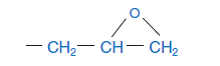
Source[1]
Most commonly, the epoxy resin prepolymer is constituted of 1 to 3 monomers, each made up of one molecule of bisphenol-A and one molecule of epichlorohydrin[2] [3](figure 2). Resins with only one unit are liquid, and these are generally used at ambient temperatures (e.g. in construction; figure 3). Resins with more than one unit are solid and are either used in a solvent, or at elevated temperatures, e.g. in industry. Generally, the epoxy resin is mixed on-site with a curing agent or hardener (generally a polyamine, figure 2, sometimes anhydrids). The chemical reaction between the resin and the curing agent is an exothermic polymerisation reaction, where the curing agent reacts with the free epoxyde groups, to form a three-dimensional network. Once fully cured, epoxies generally turn into much less toxic polymers. The cured epoxy forms a solid, high-strength material.
This provides epoxy products their favourable properties, such as[2] [3] [4]:
Figure 2: Building blocks of epoxy products: Bisphenol-A (a), Epichlorohydrin (b), example of a polyamine hardener: diethylene triamine (c)
Figure 2a: Bisphenol-A

Figure 2b: Epichlorohydrin
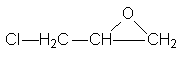
Figure 2c: diethylenetriamine

Source[5]
Figure 3: Application of an epoxy-reinforced flooring material
Source: copyright by Stichting Arbouw, reproduced with permission by the copyright holder
Products based on epoxy resins generally are multi-component products. Usually, the worker has to mix at least two components prior to applying the product: the epoxy resin and the (polyamine) hardener. In some cases, a third component is added, e.g. a filling material such as quartz sand in epoxy-reinforced flooring.
Furthermore, several ‘subtypes’ of epoxy products may be distinguished:
In this case, so-called ‘reactive diluents’ are added - generally glycidylethers - which react with the hardener and become part of the cured resin. Most epoxy products – except metal coatings – are solvent free products nowadays (see 'Major applications' as well).
Epoxy resins are used in a large variety of applications and are used primarily as coatings for consumer and industrial applications. Products based on epoxy resins include:
In addition, the components of epoxy products are frequently mixed and applied on-site. Typical applications include:
Practically all major ingredients of epoxy products are moderate to strong irritants as well as moderate to strong occupational allergens. This holds true for the epoxy resin itself as well as the polyamine or anhydride hardeners and the reactive diluents[6] [7].
Epoxy products are potent skin sensitizers (allergens). Frequently, skin contact with the individual components or the ready-for-use mixed product gives rise to allergic contact dermatitis (eczema). The contact dermatitis generally expresses at the hands or fore-arms, and sometimes in the face. Workers that have acquired an epoxy-allergy will be faced with an ever stronger skin reaction after each contact with the products. Avoiding every contact is the only option left in that case.
If relatively volatile polyamine hardeners are still used (e.g. ethylenediamine), or if the product is applied by spraying, the airways may be affected as well. Workers may be at risk of strong airway irritation as well as (allergic) occupational asthma.
Epichlorohydrin, one of the constituents of the epoxy resin monomer (figure 2) is a skin sensitizer. In addition, epichlorohydrin is classified as carcinogenic in the category 1B, ‘presumed human carcinogen’, according to the EU classification[8]. In the epoxy resin, prior to curing generally only a very low amount of residual epichlorohydrin is present. Manufacturers that are member of Epoxy Europe a sector group of Cefic, the European Chemical Industry Council have voluntary committed to a limit concentration of 0.001% of epichlorohydrin in the resins[9].
The other constituent of the epoxy resin monomer, bisphenol-A (figure 2), is a skin sensitizer too, as well as endocrine disruptive and it is also with prostate and breast cancer, neurobehavioral deficits, heart disease, and obesity[10]. Based on the CLP Regulation bisphenol-A is classified in the EU as a substance that[11].
Studies have shown that under certain conditions, such as exposure to heat, acidic or basic foods, or prolonged storage, traces of bisphenol-A can migrate from the epoxy coating into food or beverages[12]. This has led to consumer concern and regulatory restrictions. Due to its endocrine disrupting properties, Bisphenol-A has been restricted under the REACH[13] as a substance on its own and in mixtures intended for consumer use in the EU since March 2018. Its use in thermal paper has been restricted since January 2020[11].
At construction sites and in the manufacturing of wings for wind turbines or cabins of large aircraft the use of epoxy products is most widespread. In the manufacturing of other reinforced composite structures such as ships, yachts, cars and trucks its use is common as well[3] [7] [14].
Reliable data on the number of workers at risk at a European level, or the number of occupational diseases arising from exposure to epoxy products are not available. In the Dutch construction industry it has been estimated that one out of every five workers that frequently use epoxies (e.g. floor layers) develops an epoxy-allergy at a certain moment in their career[3]. Data from the Finnish Register of Occupational Diseases 2005–2016. show that exposure to epoxy compounds is the leading cause of occupational skin diseases among construction workers (37%)[15]. In Germany, it has been estimated that around 10% of construction workers' occupational allergies are due to epoxy systems[16].
Over the past few decades, the wind energy sector has grown in importance, leading to an increase in the number of workers exposed to epoxy resins. A study among workers in a Danish wind turbine blade factory during 2017–2022 showed that showed that workers exposed to epoxy resins had a significantly higher risk of dermatitis compared to non-exposed workers[17].
Council Directive 98/24/EG (‘Chemical Agents Directive’) contains minimum requirements concerning the assessment of risks due to exposure to hazardous chemicals at work[18]. Employers have to make sure that the hazards of substances and products used are identified, that the exposure is assessed and that these two aspects are combined into a risk assessment, which enables the selection of the proper risk management measures.
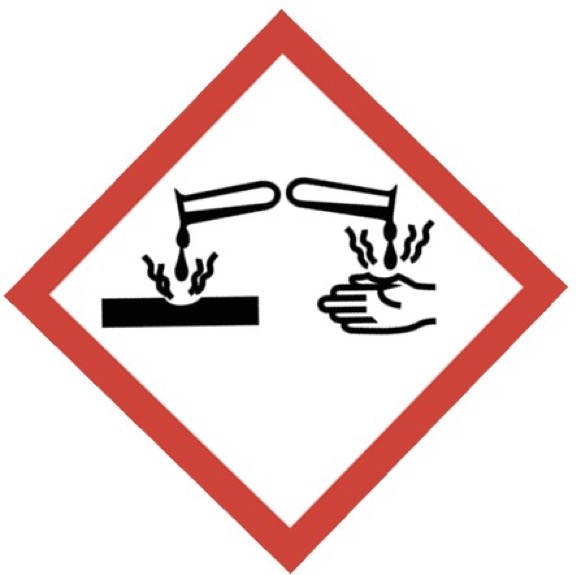
In order to enable proper risk assessment and control, companies and workers will have to recognise the products they work with as being epoxy products. Whenever a two- of three-component product is used, one should be aware that it might be an epoxy product. In that case, the product label will state “This product contains epoxies". Technical data sheets and the safety data sheets should be consulted as well. Generally, the product labelling may warn the worker as well (figure 4).
Figure 4a: Labelling of epoxy products 
| Most common labelling of the epoxy resin component:
|
Figure 4b: Labelling of epoxy products
| Most common labelling of the hardener (in most cases a polyamine) component:
|
In addition, when relatively volatile polyamine or acid anhydride hardeners are still used, products may be classified with H335 (May cause respiratory irritation) and H334 (May cause allergy or asthma symptoms of breathing difficulties if inhaled).
As dermal (skin) exposure usually is a major risk when epoxy products are used, the employer should carefully consider all tasks that may bring about skin contact and implement adequate measure to eliminate or, if not possible, minimise exposure (see below). Measures at source and measures that enable a safe use such as safer packaging and proper mixing aids should be implemented whenever possible. In practice, workers appear to find it hard to fully avoid skin contact with epoxies during work. In the construction industry as well as in ship, yacht, windmill blade and car manufacturing, large quantities of epoxy products may be applied to large surfaces. Obvious moments of skin contact include:
Even though modern epoxy products contain low-volatile diluents and hardeners in most cases, employers and workers should be aware of situations in which exposure through inhalation may be relevant, such as:
Indicative measurements for comparison with Occupational Exposure Limits or the use of risk assessment tools may support the assessment and management of risks through inhalation.
Industrial products that contain epoxy resins – such as car parts – may be produced in closed systems that largely prevent exposure to the non-cured product. Obviously, leakages of the closed-system, maintenance or cleaning of closed systems may give rise to exposure. During such activities, personal protective equipment and protective clothing may be needed. Because these activities occur irregularly and are generally of relatively short duration, these measures may be appropriate in this case.
However, in many ‘open’ applications, such as those on construction sites, windmill blade production and the manufacture of yachts, frequent exposure may occur if adequate prevention measures are not in place. Measures to prevent negative consequences such as allergic contact dermatitis and airway disease should be implemented according to the ‘prevention hierarchy’. The following paragraphs follow this hierarchy of measures.
Before deciding to use an epoxy resin-based product one should consider whether it is possible to apply alternative materials and techniques.
When epoxy products cannot be substituted, it may be possible to apply an epoxy product that is relatively less harmful. Ingredients that are less volatile or less capable of penetrating the skin may reduce the risk of harmful effects. In order to identify relatively less harmful epoxy products, one should consult the Safety Data Sheet of the supplier.
In Germany, a list has been compiled with possible ingredients of epoxy resin systems and their skin-sensitising properties[19]. For each of the substances, the list indicates whether the substance is a strong sensitiser, a weak sensitiser or an unknown sensitiser. The list is therefore a useful guide to the selection of less harmful epoxy resins.
If elimination or substitution of epoxy products is not possible, technical measures should be implemented that enable safe handling and reduce skin contact as well as risks of inhalation. These include tools, packaging, machines, etc.:
Figure 5: One-unit packaging that supports closed mixing
Source: Copyright by MC Bauchemie (Germany), reproduced with permission by the copyright holder
Figure 6: Closed mixing vessel for mortars or 2-pack products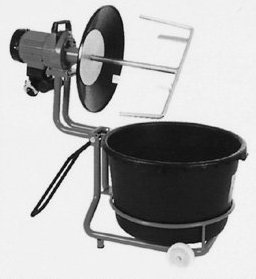
Source: copyright by Carat-tools (the Netherlands), reproduced with permission by the copyright holder
Prior to starting work with epoxies, the employer should provide training to workers on the hazards and risks and on control measures that should be taken. Workers should practice the use of protective clothing and personal protective devices.
The employer should provide for a separated mixing area which is clearly marked, so that co-workers not involved in the work involving epoxies can be protected from exposure. Mixing vessels should be placed on an even level surface. Contamination of the surrounding can be prevented by placing the bucket or container on a foil sheet on an even surface.
In addition to the measures mentioned above, the following personal protection equipment remains necessary when using epoxy products:
Early detection of skin or airway problems may prevent the development of more severe disorders such as allergic contact dermatitis or asthma. Irritant contact dermatitis may enhance the penetration of allergens through the skin, increasing the chance of developing an allergic contact dermatitis. For the early-detection of health disorders, one may use:
In order to facilitate early detection of skin disease, so-called ‘pictionnaire’ questionnaires have been developed, which use photos of affected skin[21].
After finding cases of sensitisation, skin or airway disease, the effectiveness of control measures in place should be evaluated. When the origin of the problem is found, adequate prevention measures should be implemented and their effectiveness should be evaluated. Reporting schemes of incidents and health problems within the company – in addition to any reporting obligation to national occupational disease registries – may increase the companies’ capacity to trace any remaining risks not tackled yet.
[1] Plastics Europe. Epoxy resins and curing agents, Toxicology, health, safety and environmental aspects, 2017. Available at: https://epoxy-europe.eu/lang/wp-content/uploads/2017/09/EPOXY_RESINS_AND_CURING_AGENTS-4.pdf
[2] Terwoert, J. & Spee, T., Management of allergic skin disease by epoxy’s in the construction industry; development of an international ‘Code of Practice’, Proceedings of a presentation at the 6th IOHA Conference, Pilanesberg, South-Africa, September 19-23, 2005
[3] Spee, T., van Duivenbooden, C., Terwoert, J., Epoxy resins in the construction industry, Ann. N.Y. Acd. Sci., Vol. 1076, 2006, pp. 429-438.
[4]ECHA – European Chamicals Agency. Annex xv restriction report proposal for a restriction. Substance name(s): 4,4’-isopropylidenediphenol (Bisphenol A) and bisphenols of similar concern for the environment. Available at: https://euon.echa.europa.eu/documents/10162/6b2321cf-5334-9354-cbcd-57a9345ae0fb
[5] Gestis Substance Database. Diethylenetriamine. Available at: https://gestis-database.dguv.de/data?name=013400
[6]Christiansen, A. G., Carstensen, O., Sommerlund, M., Clausen, P. A., Bønløkke, J. H., Schlünssen, V., ... & Kolstad, H. A. (2022). Prevalence of skin sensitization and dermatitis among epoxy‐exposed workers in the wind turbine industry. British Journal of Dermatology, 187(6), 988-996.
[7] HSE – Health and Safety Executive. An assessment of skin sensitisation by the use of epoxy resin in the construction industry. Research report, 2003. Available at: https://www.hse.gov.uk/research/rrpdf/rr079.pdf
[8] Regulation (EC) No 1272/2008 of the European Parliament and of the Council of 16 December 2008 on classification, labelling and packaging of substances and mixtures, amending and repealing Directives 67/548/EEC and 1999/45/EC, and amending Regulation (EC) No 1907/2006. Available at: https://osha.europa.eu/en/legislation/directive/regulation-ec-no-12722008-classification-labelling-and-packaging-substances
[9] Cefic’s epoxy europe voluntary guideline on residual epichlorohydrin in liquid epoxy resins, reactive diluents and mixtures thereof. May 2024. Available at: https://www.epoxy-europe.eu/wp-content/uploads/2024/05/2024-05-Statement-on-Residual-Epichlorohydrin.pdf
[10] Kapustka, K., Ziegmann, G., Klimecka-Tatar, D., & Ostrega, M. (2020). Identification of health risks from harmful chemical agents–review concerning bisphenol A in workplace. Production Engineering Archives, 26(2), 45-49.
[11] ECHA. Bisphenols. Available at: https://echa.europa.eu/hot-topics/bisphenols
[12] EFSA Bisphenol A in food is a health risk. 19 April 2023. Available at: https://www.efsa.europa.eu/en/news/bisphenol-food-health-risk
[13] Regulation (EC) No 1907/2006 of the European Parliament and of the Council of 18 December 2006 concerning the Registration, Evaluation, Authorisation and Restriction of Chemicals (REACH), establishing a European Chemicals Agency, amending Directive 1999/45/EC and repealing Council Regulation (EEC) No 793/93 and Commission Regulation (EC) No 1488/94 as well as Council Directive 76/769/EEC and Commission Directives 91/155/EEC, 93/67/EEC, 93/105/EC and 2000/21/EC. Available at: https://osha.europa.eu/en/legislation/directive/regulation-ec-no-19072006-registration-evaluation-authorisation-and
[14] EU-OSHA – European Agency for Safety and Health at Work, Expert forecast on emerging chemical risks related to occupational safety and health, 2009. Available at: https://osha.europa.eu/en/publications/report-expert-forecast-emerging-chemical-risks-related-occupational-safety-and-health
[15] Aalto‐Korte, K., Koskela, K., & Pesonen, M. (2020). Construction workersʼ skin disorders in the Finnish Register of Occupational Diseases 2005‐2016. Contact dermatitis, 83(6), 437-441.
[16] Spee, T., Timmerman, J. G., Rühl, R., Kersting, K., Heederik, D. J., & Smit, L. A. (2016). Determinants of epoxy allergy in the construction industry: a case–control study. Contact Dermatitis, 74(5), 259-266.
[17] Christiansen, A. G., Kinnerup, M. B., Carstensen, O., Sommerlund, M., Clausen, P. A., Bønløkke, J. H., ... & Kolstad, H. A. (2024). Occupational exposure to epoxy components and risk of dermatitis: A registry‐based follow‐up study of the wind turbine industry. Contact Dermatitis, 90(1), 32-40.
[18] Council Directive 98/24/EC of 7 April 1998 on the protection of the health and safety of workers from the risks related to chemical agents at work (fourteenth individual Directive within the meaning of Article 16(1) of Directive 89/391/EEC). Available at: https://osha.europa.eu/en/legislation/directive/directive-9824ec-risks-related-chemical-agents-work
[19]DGUV. EpoxidharzInhaltsStoff-(E I S)-Liste. Available at: https://www.dguv.de/medien/ifa/de/pra/gefahrstoffe/epoxidharze/pdf/eis-liste.pdf
[20] Kalberlah, F., ‘Vergleichende Bewertung von Epoxidharzen – Teil A: Entwicklung eines Rankingsystems für Epoxidharze’, Forschungsvorhaben F 2062, FoBig GmbH, Freiburg, 2007. Available at: https://www.baua.de/DE/Angebote/Publikationen/Berichte/F2062
[21] Coenraads P. J., Van der Walle, H., Thestrup-Pedersen, H., Rudzicka, T., Dreno, B., De La Loge, C., Viala, M., Querner, S., Brown, T., Zultak, M. Construction and validation of a photographic guide for assessing severity of chronic hand dermatitis, British Journal of Dermatology, vol. 152, 2005, pp. 296-301.
EU-OSHA – European Agency for Safety and Health at Work, Practical tools and guidance on dangerous substances. Available at: https://osha.europa.eu/en/themes/dangerous-substances/practical-tools-dangerous-substances
EU-OSHA – European Agency for Safety and Health at Work. Respiratory sensitisers. Factsheet 39, 2003. Available at: https://osha.europa.eu/en/publications/factsheet-39-respiratory-sensitisers
EU-OSHA – European Agency for Safety and Health at Work. Skin sensitisers. Factsheet 40, 2003. Available at: https://osha.europa.eu/en/publications/factsheet-40-skin-sensitisers
EU-OSHA – European Agency for Safety and Health at Work. Substitution of dangerous substances in the workplace. Infosheet, 2018. Available at: https://osha.europa.eu/en/publications/info-sheet-substitution-dangerous-substances-workplace
Epoxy Europe. Safe handling of epoxy systems. Available at: https://www.epoxy-europe.eu/safety/
Izvēlēties tēmu