


Measures to control workers’ exposure to hazardous substances are often integrated into existing work processes and practices, in which personal protective equipment (PPE) also frequently plays an important role. These measures can reduce exposure, but they may not always provide the most effective or sustainable level of protection, particularly when opportunities to control hazards earlier in the process have not been fully considered. The hierarchy of controls supports the identification of a range of control options for addressing the risks of exposure to hazardous substances in the workplace in a more fundamental manner.
Council Directive 89/391/EEC of 12 June 1989 on the introduction of measures to encourage improvements in the safety and health of workers at work[1] establishes basic rules on protecting the health and safety of workers. These aim to eliminate the risk factors for occupational diseases and accidents as much as possible. The employer shall establish means and measures for protecting workers, involving activities of prevention, information and training of workers. The employer shall implement the measures on the basis of a number of general principles of prevention, among which: avoiding risks, combating the risks at source, replacing the hazardous substances by the non-hazardous or the less hazardous ones, and giving collective protective measures priority over individual protective measures[1]. These principles are further reflected in the hierarchy of control measures set out in article 6.2 of the Chemical Agents Directive[2]: a) substitution, b) process design and engineering controls that prevent release of substances at source, c) collective protective measures at source, such as ventilation and organisational measures, and d) individual measures, such as personal protective equipment. The Carcinogens, Mutagens and Reprotoxic agents Directive[3] defines more stringent requirements for carcinogenic, mutagenic and reprotoxic substances. These substances should be replaced as far as technically possible, regardless of economic considerations (art. 4.1). If that is not possible, the company should use closed systems (art. 5.2), and if that is not possible as well, the employer should ensure that exposure is reduced to a level as low as technically possible by means of a combination of measures, including the limitation of the quantities of substances present and the number of workers exposed (art. 3 & 5)[3].
In addition, chemical-specific legislation, such as Regulation No 1907/2006 (REACH)[4] sets rules for placing chemicals on the EU market and reinforces the requirement to substitute hazardous substances, thereby addressing risks at their source. Substitution is directly linked with the main objectives of REACH: ensuring a high level of protection for human health and the environment. REACH is a key legislative instrument supporting the EU's Chemicals Strategy for Sustainability[5]. It aims to better protect citizens and the environment, while also boosting innovation by promoting safe and sustainable chemicals. For example, the EU strategy prioritises phasing out the use of per- and polyfluoroalkyl substances (PFAS)[6], which are highly persistent and bioaccumulative and are used in aqueous film-forming foams (e.g. firefighting foam).
The general principle of the hierarchy of control measures for hazardous substances is to take measures as close to the source as possible. However, various variants of the hierarchy may be found in literature. One well-known variant is referred to as the ‘STOP-principle’: Substitution (substance or process), Technical controls, Organisational measures and Personal protective equipment. The hierarchy in the Chemical Agents Directive, uses a slightly different categorisation. It splits up measures at source into substitution and other technical measures that limit the release of substances, while technical and organisational measures are combined into the category ‘collective measures’.
Is the hierarchy really a hierarchy?
Although an approach based on a hierarchy of controls seems sensible and straightforward, the distinction between the various levels of control is not always as clear-cut as one might expect. Consider for example separation of a worker from the source of hazardous substances by means of shielding. Only when the shielding is provided very close to the source (encapsulation) this may be considered a measure at the highest level of the hierarchy.
Moreover, in certain cases, measures at a lower level may be more effective than measures at the higher level. For example, in cleaning and degreasing with solvents, a well-designed local exhaust ventilation may be more effective than substituting the solvent by a less volatile one and not using a local exhaust ventilation. Finally, in many cases a combination of control measures at various levels will be needed. Therefore, in practice, the hierarchy of control should not be viewed as a strict rule, but as a tool that provides direction in risk management and helps choosing the best and most effective control measures. Employers should document the rationale of their choice of control measures, regularly revise them, and reflect on their efficacy and appropriateness in cooperation with the workers.
In this article the following general hierarchy is used, adapted from the sources mentioned above, which will be elaborated in more detail in the following sections:
Measures at source may either completely prevent the release of hazardous substances, or reduce its release and dispersion as much as possible, or change the release in such a way that it is less harmful. The following subcategories may be distinguished:
The article Substitution of hazardous chemicals describes the issue of elimination and substitution in more detail.
Elimination means a complete removal of the use of hazardous substances from the process in question. To identify possible elimination options, a broad approach is necessary. Instead of looking at the substance or product in question, one should look at the work process and function that has to be fulfilled by that product or substance. In order to achieve this, it will be helpful to have an open-minded attitude and to be willing to consider alternatives. Examples of such an approach are:
Lastly, if the use of hazardous substances cannot be eliminated, it may be considered to eliminate the activity itself. Some hairdressers, for example have stopped offering permanent waving to customers, in order to prevent exposure to the sensitising components.
Substituting a substance or product may involve changes of the (chemical) composition, the ‘form’ or appearance, or the product’s packaging. Generally, it is advisable to consult multiple suppliers in order to find out about the possibilities.
As far as the product composition is concerned, substitution may reduce the hazard (‘harmfulness’) of the product or substance used, reduce its exposure potential, or both. An example of the latter is the substitution of dibasic esters for methylene chloride as a paint stripper[8]. Dibasic esters are less toxic (hazardous), but also less volatile than methylene chloride, so the exposure is lower too.
Examples of products that mainly reduce exposure are:
A change of the product ‘form’ may reduce the exposure potential, for instance conversion of powders to granules, reduces inhalable dust generation and associated respiratory exposure.
Examples include:
Another opportunity is to supply a product in solution instead of as a powder, or to coat the particles with a layer to decrease the dustiness or the reactivity of the material. For example, in detergent manufacturing, enzyme granules are coated to prevent inhalation exposure and reduce sensitisation risk among workers. Also, titanium dioxide nanoparticles used in sunscreens are frequently coated with aluminum oxide or silica in order to reduce surface reactivity and thus, dermal risks[8].
Finally, a well-designed packaging may reduce or even prevent exposure. Two-component reactive coatings, adhesives or fillers may contain irritating or strongly sensitising substances. This is the case for epoxy products, for example. Packages are available that allow mixing the components inside the packaging and in pre-set mixing ratio, without any chance of exposure during mixing[11]. Another well-known example is the water-soluble packaging for e.g. dishwashing tablets or pesticides.
If elimination or substitution is not possible for technical reasons, process adaptation may be an option to reduce the release of substances at the source. This may also be a solution in cases of exposure to substances generated by work processes, such as wood dust, welding fumes, respirable crystalline silica, flour dust etc. A thorough assessment of tasks and activities may identify ways to prevent or minimise the release of these substances.
Process adaptation may include the introduction of automation technologies such as robotics, digitalised process control systems, and artificial intelligence. These technologies can reduce occupational exposure by removing workers from high-exposure tasks. Examples include:
Another strategy is to reduce the amount of ‘energy’ introduced into the process. For example, reducing the drop height of dusty products from transportation belts (e.g. animal feed, harvested products) significantly reduces the generation of dust and exposure to bacterial toxins (endotoxins) or optimising the temperature and pressure to reduce the release of volatile organic substances for example during extrusion of polymers. Similarly, exposure can be reduced through careful handling practices, for example emptying bags carefully, without shaking e.g. bags with flour handled by bakers[12]. Cleaning activities are another obvious example: vacuum cleaning or wet cleaning instead of wiping or even the use of compressed air prevents the dispersion of and exposure to dust.
Preventing exposure to dust – or fibres – can also be achieved by using processes or methods that release fewer particles or use less energy. For example, cutting materials instead of sawing them. This is practiced by insulators that install glass wool or rock woolIt is also a good practice to use equipment that supports properly measuring out the quantity of a substance or product that is needed to perform a certain task (‘dosing aids’). They may help professional cleaners to correctly dose highly-concentrated products while preventing direct contact.
So-called ‘wet suppression techniques’ may be regarded process adaptations at the source as well. Spraying water onto concrete, brick or ceramic materials that are cut, polished, scoured or drilled reduces exposure to silica. Similar techniques are used when old asphalt layers on roads are removed. One final example, in car paint spraying and in floor coating, is ‘wet-in-wet’ application of a top coating onto primer coatings. This technique has several advantages: it increases adherence of the several coating layers, and it saves time. Moreover, it prevents a sanding and subsequent degreasing step and thus prevents the related exposure to solvents and sanding dust.
Isolation of the source of the hazardous substances may involve various types of enclosure, encapsulation and shielding of equipment and processes. If emissions of substances are completely or almost completely prevented, the term ‘containment’ is often used.
In metal working machines, a certain degree of shielding is often provided in order to limit contact with mists of metal working fluids. In production environments such as paint production, covering or partial covering of production vessels is applied more and more frequently. At construction sites, closed mixing vessels for mortars or two-pack products are becoming more common (Image 1). Another well-known example is the closed solvent-cleaning equipment for paint spray guns.
In hospitals and home care, closed containers for contaminated laundry are used, in order to limit potential exposure to antineoplastic drugs, i.e. anti-cancer drugs[13]. For administering such drugs in hospitals, closed system transfer devices (CSTDs) should be used. Such devices mechanically prohibit the transfer of environmental contaminants into the system and the escape of the hazardous medicinal products or vapour concentrations outside the system[14].
Image 1: Closed mixing vessel for mortars or 2-pack products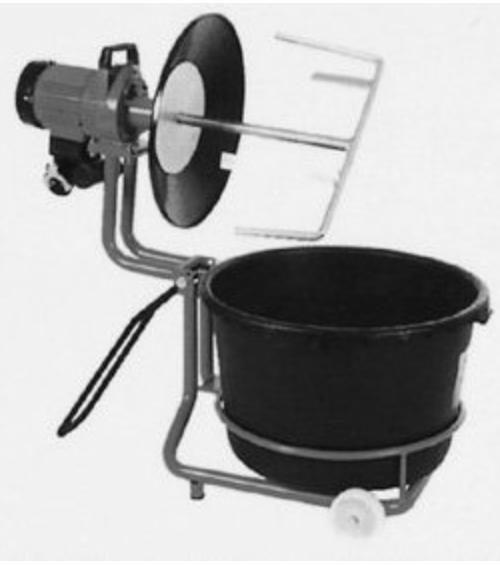
Source: copyright by Carat-tools (the Netherlands), reproduced with permission by the copyright holder
If measures at the source do not sufficiently reduce the release of substances, technical measures that reduce further dispersion (and consequently exposure of workers) should be (additionally) considered. Local exhaust ventilation, which extracts the substances as close to the source as possible, should always be the first option to consider. Usually, it is much more effective than general (room) ventilation. However, daily checks of its proper functioning - by the worker, as well as periodic maintenance – to be organised by the employer – are crucial to the effectiveness of these measures.
Designing and installing effective local exhaust ventilation (LEV) requires specialist knowledge. If the design, installation, maintenance or the use of LEV is improper, its effectiveness will be severely reduced[15]. It is advisable to consult a specialised supplier in order to ensure its effectiveness. A general recommendation is, to place the inlet of the system as close to the source as possible. For LEV-hoods a maximum distance equal to the diameter of hood is often used as a rule of thumb. Other recommendations are to prevent long or bended ducts, and to take account of potentially disturbing air flows and of the direction and the kinetic energy of the emitted substances. In many cases it will be necessary to (partially) enclose the process to increase the effectiveness of the LEV.
For welding and soldering several options are used, including static or adjustable hoods, work benches with downdraft ventilation, and on-tip extraction systems on the solder or welding torch[15]. On-tip extraction may be relatively efficient, but this depends on the exact position and movements of the welding torch.
Also integrated LEV-systems in sanding machines for wooden floors (parquet) are very efficient in reducing exposure to wood dust (Image 2).
Image 2: Sanding machine with LEV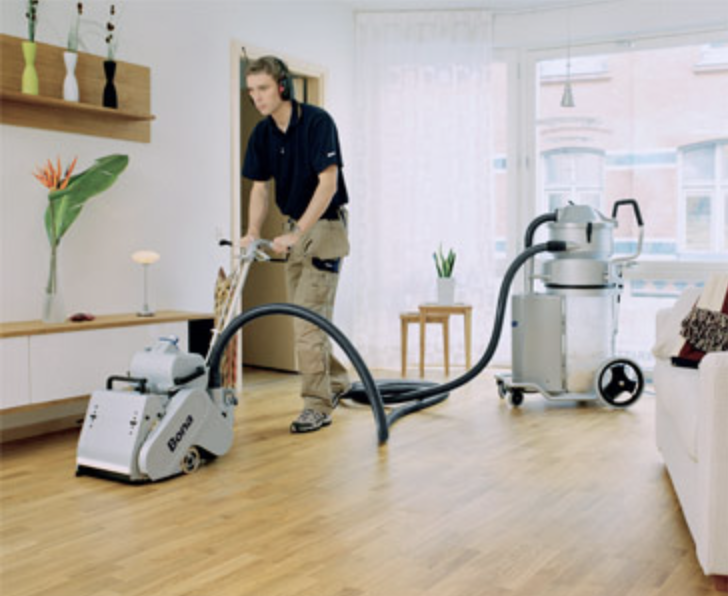
Source: copyright by Bona, reproduced with permission by the copyright holder
In so-called push-pull ventilation systems an extraction point is combined with a flow of clean air, which crosses the source of contamination and moves towards the extraction point. If properly designed – which needs to be done very carefully – this system may be very efficient. Image 3 shows a dropping location at a transportation belt in an onion processing facility.
A further example from the healthcare sector is the use of cytotoxic drug safety cabinet for preparing hazardous medicinal products (e.g. antineoplastic drugs used for cancer treatment)[14]. The cabinets are equipped with advanced filtration systems, negative pressure, and specific, often vertical, laminar airflow to prevent the release of hazardous aerosols and particles.
Image 3: Push-pull system in an onion-processing facility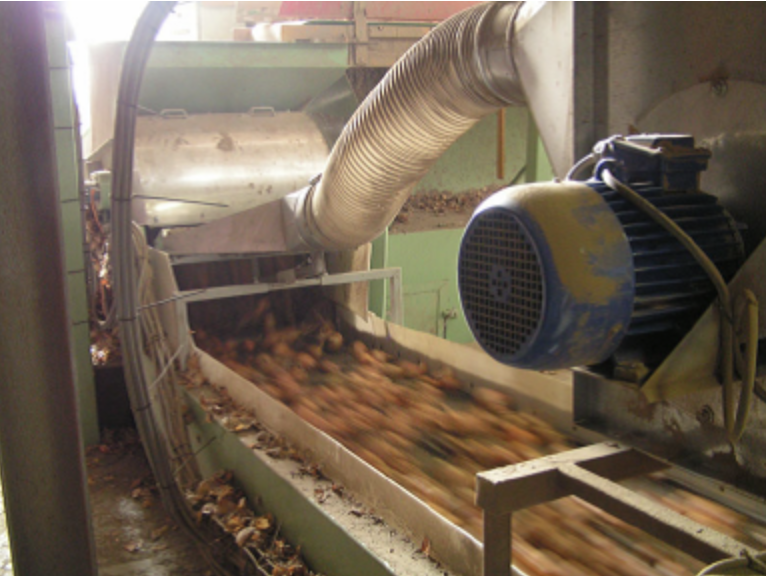
Source: copyright by Pakstofaan (the Netherlands), reproduced with permission by the copyright holder
Although local exhaust ventilation generally is the preferred option, it is never 100% efficient. Therefore, additional general ventilation is needed to prevent pollutants, that have not been captured, from building up to harmful concentrations. In cases where there are many small diffuse sources, general ventilation may even be the preferred option. This could be the case, for example, in a large production hall where several workers carry out occasional welding tasks. However, it should be noted that the principle of general ventilation is not capturing the hazardous substances, but only dilute their concentration. In some cases, so-called ‘local displacement’ of contaminated air is possible instead of dilution. This technology introduces fresh cool air at low velocity near the floor and pushes warmer air and contaminants upward towards the ceiling, where they are removed by exhaust systems. It is applied in spray cabins, for example. In many companies it is still thought that natural ventilation, i.e. just opening doors or windows, may be sufficient. However, only in rare cases that is true. Similar to local exhaust ventilation, the design, installation and maintenance of general ventilation require specialist knowledge. Careful consideration is needed of the location of air inlets and outlets, in order to prevent ‘blind spots’ or short circuits: fresh air that is brought in, is extracted again close to the inlet, without diluting the pollutants. In addition, the required air flow (in m3/hour) or the number of air changes per hour should be carefully determined as well. The geometry of the room, any objects that might disturb airflows and interfering air flows all should be considered too. Also, the possibilities for recirculation, in relation to filtering options and energy demand for heating, are often considered. In most cases, recirculation is not allowed when carcinogenic substances are present. It is advisable to consult a specialised supplier of ventilation systems in order to ensure its effectiveness.
Organisational measures have generally not been very strictly defined and may in fact include several types of measures. Here, a distinction is made between spatial measures, influencing the locations of worker and hazardous substances and the distance between the two, and temporal measures, determining the period of time in which emission of substances occurs relative to the period of time that workers are present or exposed. One may regard worker training an organisational measure as well.
The aim of segregation from the source measures is to increase the distance between the worker and the substances emitted. Ideally workers would be fully separated from the source of the substances.
Full separation may be achieved by access restrictions to certain areas. For example, in greenhouses, access to departments in which crops have been recently treated with pesticides is often temporarily restricted. Shortly after the treatment this prevents exposure to vapours or mists by inhalation.
Full separation may also be achieved by creating separate rooms for specific activities. Separate drying rooms for painted objects reduce exposure to evaporating solvents. In garages, a separate motor test room is often available. Generally, this measure is combined with measures at other levels of the hierarchy, such as increased room ventilation or LEV on the exhaust pipes of the vehicles tested.
Access to work in confined spaces, e.g. to carry out maintenance in tanks, should be strictly limited to those who are properly instructed and protected.
An increase of the distance between worker and the substances may be organised by careful routing in case of internal transportation, or by considering opportunities for (semi-) automation, the use of robots and remote control. Paint spray robots and welding robots are common in the car industry. In pesticide spraying in greenhouses remote controlled equipment can be used sometimes. Another example of separation is a careful choice of the location of diesel-powered generators at construction sites. If these are placed downwind, the diesel motor exhaust is carried away from the workers.
Finally, a much less radical type of separation is the use of long-stemmed brushes, rollers or mixing-equipment for coatings, e.g. for reactive 2-pack coatings that contain epoxy resins or isocyanates. This type of equipment increases the distance from the source and may have some effect on both inhalation and dermal exposure, although not a large effect.
Temporal measures may reduce the duration of the exposure for individual workers. Task rotation is a well-known example in e.g. hairdressers that have to perform frequent ‘wet work’ such as washing hair. In many cases, young hairdressers or apprentices carry out a large part of such wet work activities. However, as a rule of thumb, wet work for more than 2 hours per day is likely to lead to contact dermatitis[16] [17]. Therefore, spreading these tasks among more workers may reduce the risk.
A thoughtful work planning may reduce workers’ exposure as well. For example, in greenhouses it is often tried to carry out pesticide spraying as much as possible late in the afternoon, when most workers have already left.
PPE must only be used when other measures are not sufficiently effective or not possible. Directive 89/656/EEC lays down the minimum requirements for the use of personal protective equipment used by workers at work.
PPE may seem the easiest or less expensive method to prevent exposure. However, the use of PPE may be difficult to clean and maintain and rather burdensome for workers and may introduce new risks. Masks and respirators can make breathing more difficult and hinder communication, mobility, hearing or sight. This may in turn increase safety risks. Some of the equipment, air supplied systems in particular, may be rather heavy or may hinder moving around because of the need to use hoses. In hot environments may increase the risk of heat stress. The same holds true for protective gloves, and protective clothing in general. A prolonged use of gloves may in fact be a cause of skin disease. For all these reasons, the need to wear PPE should be restricted to limited periods as much as possible.
Moreover, the effectiveness of PPE strongly depends on its appropriateness to the work process and proper use. Practical experiences at workplaces have shown that this may be complicated: gloves cannot be worn for too long, because substances may penetrate them and the skin may get weak, skin contamination occurs when gloves are put on or off, and the duration that filters of respirators are used may not be properly recorded and compared with its recommended lifespan. Respirator filters may also be affected by the storing conditions. Therefore, measures at a higher level in the hierarchy of controls are more reliable. If several substances are used together, their effectiveness may be limited. (e.g. a solvent may make a glove more permeable for a substance).
Specific attention should be paid to the use of PPE when so-called ‘vulnerable groups’ are involved. For example, the use of respirators may be even more burdensome, or even impossible, for workers who suffer from asthma. Young workers may be more vulnerable in terms of a ‘proper use’ of PPE, as they often lack experience and training and work on short-term temporary contracts. PPE may not be tailored to smaller people or women either.
Generally, the Safety Data Sheet (SDS) of a product or substance may be helpful in selecting the proper PPE. However, when process-generated substances are involved (silica, wood dust, welding fume, flour dust etc.), obviously no SDS is available. There may be problems in selecting adequate PPE when several substances are used at the same time. As it is hard to define general rules, specific advice that is tailored to the nature of the substances, the amounts used, the activities carried out and the resulting exposure potential may be sought from preventive and occupational health services or suppliers of PPE.
In the use of skin protection, a careful selection is needed of a type of glove that offers adequate protection against the substances involved while at the same time does not hinder the tasks that have to be carried out. Aspects to consider include the glove material and the thickness of the glove, both in relation to the penetration time of the substances and the need for an optimal tactility. In any case, leather, cotton and polyethylene gloves generally offer either little or no protection to chemicals. Other gloves may even introduce new risks, especially gloves that contain allergens, such as latex. Therefore, in the healthcare sector, latex gloves have been increasingly substituted by polyvinylchloride gloves.
In addition, occlusive gloves in particular should not be worn for long periods. If so, perspiration will make the skin weak and irritant cytokines may be released in the skin, eventually leading to skin disease (eczema/ dermatitis).
General recommendations related to the use of protective gloves include:
Despite of the many potential problems, there are many examples of good practices related to the use of gloves. Examples include the use of (vinyl) gloves by hairdressers when using permanent waving or dying solutions, and by home care workers when dermal exposure may occur to laundry that is contaminated with antineoplastic drugs.
For many professions, it is also recommended to design a skin protection plan that includes hand washing, skin protection and skin care; this applies to “dirty work” in manufacturing and construction as well as to service professions involving frequent hand washing, wet work or skin disinfection.
Generally, the selection of respiratory protection equipment requires expert advice. The range of options is very extensive. Aspects to consider in the choice of a specific type of equipment include:
A distinction can be made between devices that filter the air that the worker inhales, and so-called air-supplied or ‘environment independent’ systems, that provide fresh air to the breathing zone of the worker. The latter type of equipment may either draw fresh air from an external source (e.g. from cylinders), or filter the workplace air.
In systems that filter the air that is inhaled, the type of filter is one important factor that determines its level of protection. In order to prevent inhalation of dust or fumes, filtering facepieces with various levels of protection exist (P1, P2, and P3). In case of exposure to vapours or gases, specific filter types are available for classes of substances, with subcategories according to their level of protection (e.g. type A for organic vapours). In both cases, the filters may be applied in a half-facepiece (covering nose and mouth) or in a full-face mask, covering the entire face. For coarse dust, more simple filtering facepieces that cover the nose and mouth are in use as well. More detailed information on filter types may be found in the article on respiratory protection equipment. Air supplied or independent systems usually are applied with full-face masks and are mostly used in more demanding cases that require high levels of protection, or for example where a high physical workload prevents the use of filtering masks.
Regarding the required level of protection, two commonly-used parameters are relevant;
For optimal protection, respiratory protection devices should be properly used. Perfect fit to the face is crucial. It is a well-known fact that even a beard of one or two days may severely reduce the level of protection. It is recommended that extensive fit testing is carried out, personalised equipment is used, and regular checks are carried out to ensure that there are no leaks. PPE may also have to be fitted to smaller or taller workers or women. In addition, the duration of use should be recorded and the manufacturer’s advice on the maximum duration of use should be followed and carefully taken into account when several substances are present. If not in use, respirators should be stored in a clean, locked place, where they cannot be contaminated.
In practice it has been observed that professionals in occupational hygiene often tend to rely on subjective judgement of the efficacy of control measures[18]. Although empirical information on the efficacy of control measures does exist, most of this information is scattered. The online database ‘Exposure Control Efficacy Library’ (ECEL)[19]
systematically collects and evaluates information on occupational and environmental risk management measures
Technical factors that determine the efficacy of control measures may vary widely, along the various types of control measures. A proper design, installation and maintenance of facilities such as general ventilation, local exhaust ventilation or closed equipment is crucial to achieve its potential effectiveness. The design of a control measure and its potential for success is optimal when it helps workers to properly use it, without causing additional effort. Examples that may illustrate this principle are an automatic switch-on for LEV, connected to the switch-on of the equipment used or to doors to be opened. Another example is a closed gun cleaner that can only be opened after a certain period of time, in order to allow solvent vapours to be exhausted and removed.
It has been well recognised that the proper functioning of control measures may greatly depend on how they are applied. One of the most obvious examples is an LEV-system with a moveable arm that has to be repositioned frequently in order to be fully effective. Another example is the use of guards on machines (e.g. metalworking machines) or the covering of vessels. Workers may try to circumvent such measures because they can restrict access, impair visibility or be time-consuming. Therefore, it is crucial to consult with workers prior to implementing control measures. Training on the proper use of the control measures must be provided, with refresher training scheduled at regular intervals. The Framework directive prescribes that such consultation should be carried out: “Employers shall consult workers and/or their representatives and allow them to take part in discussions on all questions relating to safety and health at work"[1]. Workers must be informed about the risks in the workplace and the related health effects. Employers will benefit from documenting their rationale for choosing specific prevention measures and a regularly reassessing and adapting them in line with technical progress.
Selecting the proper control measures is part of a broader process of risk assessment and management, in which many companies may need support. A regular update and adaptation to technical progress should be foreseen, as well as provisions for exceptional and foreseeable higher exposures when carrying out maintenance, or for incidents. It is advisable to clearly attribute responsibilities for the implementation of specific measures, control of efficacy and maintenance. This may be supported by expert advice or by the use of various tools and available sources of information. hazardous
Various established tools exist which facilitate the risk assessment fofhazardous substances. See also Risk management tools for hazardous substances. In most cases these tools also direct to potential measures, or facilitate the assessment of the effect of potential measures. Four of the most well-known tools are the International Chemical Control Toolkit of ILO[20], the British COSHH-Essentials[21], the German EMKG (Einfaches Massnahmenkonzept Gefahrstoffen)[22] and the Dutch Stoffenmanager[23]. The first three are Control Banding tools which directly direct the user to a class (‘band’) of control measures, and may provide links to sectoral or process-related guidance. A number of specific control measures have been further described in ‘control guidance sheets’. Stoffenmanager enables a qualitative as well as (for inhalation exposure) a quantitative risk assessment, after which the effectiveness of specific control measures may be assessed by the same tool. This tool has a link to guidance on control measures as well, and is available in a Dutch, English and German version.
Many national institutes of the member states provide information on and links to good practices. EU-OSHA provides a database with practical tools and guidance on hazardous substances on its website[24]. The roadmap on carcinogens brings together solutions and tools for businesses and workers to avoid exposure to carcinogens at work[25]. Webportals such as SUBSPORTplus[26] the SAAToolbox (Substitution and Alternatives Assessment Toolbox)[27] offer information for supporting the substitution process of hazardous chemicals.
These links may serve as a very useful source of information on options for control measures. However, it has to be stressed that they do not provide a ‘recipe’ that can be applied right away. Controlling the risks of exposure to hazardous substances has in many cases to be ‘tailor-made’, and carefully adapted to specific circumstances in the own company[28]
[1] Council Directive 89/391/EEC of 12 June 1989 on the introduction of measures to encourage improvements in the safety and health of workers at work. Available at: https://osha.europa.eu/en/legislation/directives/the-osh-framework-directive/1
[2] Council Directive 98/24/EC of 7 April 1998 on the protection of the health and safety of workers from the risks related to chemical agents at work (fourteenth individual Directive within the meaning of Article 16(1) of Directive 89/391/EEC). Available at: https://osha.europa.eu/en/legislation/directive/directive-9824ec-risks-related-chemical-agents-work
[3] Directive 2004/37/EC of the European Parliament and of the Council of 29 April 2004 on the protection of workers from the risks related to exposure to carcinogens, mutagens or reprotoxic substances at work (Sixth individual Directive within the meaning of Article 16(1) of Council Directive 89/391/EEC). Available at: https://osha.europa.eu/en/legislation/directive/directive-200437ec-carcinogens-or-mutagens-work
[4] Regulation (EC) No 1907/2006 of the European Parliament and of the Council of 18 December 2006 concerning the Registration, Evaluation, Authorisation and Restriction of Chemicals (REACH), establishing a European Chemicals Agency, amending Directive 1999/45/EC and repealing Council Regulation (EEC) No 793/93 and Commission Regulation (EC) No 1488/94 as well as Council Directive 76/769/EEC and Commission Directives 91/155/EEC, 93/67/EEC, 93/105/EC and 2000/21/EC. Available at: https://osha.europa.eu/en/legislation/directive/regulation-ec-no-19072006-registration-evaluation-authorisation-and
[5] EU Commission. Chemicals Strategy. Available at: https://environment.ec.europa.eu/strategy/chemicals-strategy_en
[6] ECHA. Per- and polyfluoroalkyl substances (PFAS). Available at: https://echa.europa.eu/hot-topics/perfluoroalkyl-chemicals-pfas
[7] NEPSI, European Network for Silica. Task guidance sheets. Available at: https://guide.nepsi.eu/sheets/
[8] EU-OSHA - European Agency for Safety and Health at Work, Innovative solutions to safety and health risks in the construction, healthcare and Horeca sectors, Report, 2011. Available at: https://osha.europa.eu/en/publications/innovative-solutions-safety-and-health-risks-construction-healthcare-and-horeca-sectors
[9] Geier, J., A. Krautheim, W. Uter, H. Lessmann, A. Schnuch, Occupational contact allergy in the building trade in Germany: influence of preventive measures and changing exposure, Int. Arch. Occup. Environ. Health, vol. 84, no. 4, 2010, pp. 403-411.
[10] CCOHS. Hazard and Risk. Available at: https://www.ccohs.ca/oshanswers/hsprograms/hazard/hierarchy_controls.html
[11] Spee, T., C. van Duivenbooden, J. Terwoert, Epoxy resins in the construction industry, Ann N.Y. Acad. Sci vol. 1076, 2006, p. 429-438.
[12] Meijster, T., 2009, Exposure intervention and health impact assessment – The example of baker’s asthma (thesis), Utrecht University, 2009.
[13] Fransman, W., Antineoplastic drugs, occupational exposure and health risks (thesis), Utrecht University, 2006.
[14] EU Commission, Guidance for the safe management of hazardous medicinal products at work, 2023. Available at: https://osha.europa.eu/en/publications/guidance-safe-management-hazardous-medicinal-products-work
[15] HSE – Health and Safety Executive, Controlling airborne contaminants at work; A guide to local exhaust ventilation. Available at: https://www.hse.gov.uk/pubns/priced/hsg258.pdf
[16] HSE – Health and Safety Executive, Managing skin exposure risks at work, HSE, 2015. Available at: http://www.hse.gov.uk/pubns/priced/hsg262.pdf
[17] Uter, W., A. Pfahlberg, O. Gefeller, H.J. Schwanitz, Hand dermatitis in a prospectively followed cohort of hairdressing apprentices: final results of the POSH study, Contact Dermatitis, vol. 41, no. 5, 1999, p. 280-286.
[18] Fransman, W., J. Schinkel, T. Meijster, J. van Hemmen, E. Tielemans, H. Goede, Development and Evaluation of an Exposure Control Efficacy Library (ECEL), Ann. Occup. Hyg., vol. 52, no. 5, 2008, pp. 567-575.
[19] TNO. ECEL 3.0. An integrated risk management measure library. Available at: https://diamonds.tno.nl/projects/ecel
[20] ILO International Chemical Control Toolkit. Available at: https://webapps.ilo.org/static/english/protection/safework/ctrl_banding/toolkit/icct/
[21] HSE. Control of Substances Hazardous to Health (COSHH). Available at: https://www.hse.gov.uk/coshh/
[22] BAuA. Einfaches Maßnahmenkonzept Gefahrstoffe (EMKG). Available at: https://www.baua.de/DE/Themen/Chemikalien-Biostoffe/Gefahrstoffe/EMKG/Einfaches-Massnahmenkonzept-EMKG_node.html
[23] Stoffenmanager. Available at: https://stoffenmanager.com/en/
[24] EU-OSHA – European Agency for Safety and Health at Work. Practical tools and guidance on dangerous substances. Available at: https://osha.europa.eu/en/themes/dangerous-substances/practical-tools-dangerous-substances
[25] Roadmap on carcinogens. Available at: https://stopcarcinogensatwork.eu
[27] OECD - Organisation for Economic Co-operation and Development. Substitution and Alternatives Assessment Toolbox (SAAToolbox) for chemicals and nanomaterials. Available at: https://www.oecd.org/en/data/tools/substitution-and-alternatives-assessment-toolbox-for-chemicals-and-nanomaterials.html
[28] Walters, D. (2006). The efficacy of strategies for chemical risk management in small enterprises in Europe: evidence for success? Policy and Practice in Health and Safety, 4(1), 81-116.
EU-OSHA – European Agency for Safety and Health at Work, Dangerous Substances e-tool. Available at: https://osha.europa.eu/en/tools-and-resources/e-guides/dangerous-substances-e-tool
EU-OSHA – European Agency for Safety and Health at Work. Practical tools and guidance on dangerous substances. Available at: https://osha.europa.eu/en/themes/dangerous-substances/practical-tools-dangerous-substances
EU-OSHA – European Agency for Safety and Health at Work. Substitution of dangerous substances in the workplace. Info sheet, 2018. Available at: https://osha.europa.eu/en/publications/info-sheet-substitution-dangerous-substances-workplace
EU-OSHA – European Agency for Safety and Health at Work. Substitution of dangerous substances in workplaces. A training course for OSH practitioners - Participants material. Training resources, 2021. Available at: https://osha.europa.eu/en/publications/substitution-dangerous-substances-workplaces-0
EU-OSHA – European Agency for Safety and Health at Work. Substitution of dangerous substances in workplaces. A training course for OSH practitioners - Trainer’s material. Training resources, 2021. Available at: https://osha.europa.eu/en/publications/substitution-dangerous-substances-workplaces
Seleccionar tema