


Transport of goods by freight containers is used all over the world. More than 600 million container units are filled, shipped and stripped annually[1]. The freight containers are frequently treated with chemicals that kill pests before shipping. This process is termed fumigation.
When these containers arrive at the destination there may be residues of the fumigation chemicals that may represent a risk to the workers that open and unload the containers. Fumigated containers are not always correctly labelled with the appropriate symbols and warnings in accordance with regulations. Several incidents have been reported where workers have been exposed to such fumigant residues and experienced adverse health effects, some of them severe.
Fumigation of containers is aimed at protecting cargo from being damaged by pests during the rather long transport time, and thereby to prevent the spread of unwanted organisms. Container fumigation involves individual cargo transport units (CTUs), which are usually sealed prior to shipment and not usually fumigated during transit. In contrast, bulk cargo hold fumigation involves fumigating large, enclosed spaces on ships (e.g. holds containing grain or wood pellets) during the voyage ('in-transit fumigation')[2].
The chemicals used for fumigation are toxic not only to pests, but also to humans. The fumigants are usually applied in a gas form to the containers. The major fumigants used today are methyl bromide (MeBr), sulfury fluoride (SO2F2) and phosphine (PH3) (see below).
Fumigants deliberately added to the containers should be distinguished from chemicals off-gassing from the goods in the cargo. Off-gassing from the cargo includes a wide range of chemicals with various characteristics and health effects. Toluene, benzene and xylene are solvents, and typical examples of chemicals that are detected in containers but are not used as fumigants as they originate from the cargo. Some chemicals such as formaldehyde may be released from materials in the cargo but might also be used as fumigants.
Some relevant questions on this topic:
To address these questions an EU-OSHA project[3] conducted a literature survey, covering both scientific and non-scientific literature such as reports and other publications. Furthermore, one large and one small European port have been visited. The aim was to observe how these containers are handled and to gain an understanding of good practices.
Several international regulatory instruments are in place to ensure the safe handling of fumigated containers at ports and by end-users. The most important of these are International Labour Organization (ILO) Convention 155 (Occupational Safety and Health Convention)[4], ILO Recommendation 164 Occupational safety and Health[5] and the EU OSH Framework Directive 89/391/EEC[6] In addition, international regulations and guidelines developed by the International Maritime Organization (IMO), an agency of the United Nations are aimed at ensuring safety at sea. A key document is the SOLAS Convention (International Convention for the Safety of Life at Sea)[7] (SOLAS), 1974 Other IMO instruments, in particular the International Maritime Dangerous Goods Code (IMDG Code)[8] and the International Convention for Safe Containers (CSC)[9], specifically address the safe transport of dangerous goods and the safety of container operations, including aspects relevant to the handling of fumigated containers. These are further detailed in the recommendations from the Maritime Safety Committee of IMO, particularly the Recommendations on the safe use of pesticides in ships (MSC.1/Circ1358)[10] and the Recommendations on the safe use of pesticides in ships applicable to the fumigation of cargo transport units (MSC.1/Circ.1361/Rev.1)[11].
While European Union (EU) regulations and various national legislative acts include rules to protect workers in ports or at the end-user sites, the IMO regulations and recommendations including the CSC are limited to the sea. The IMDG Code covers issues such as packing, container transportation and stowage. Proper labelling of fumigated containers is mandatory.
The protection of the safety and health of workers when handling fumigated containers at the port and at the end-user is regulated by the OSH Framework Directive[6] and specific OSH directives, in particular the Chemical Agents Directive (98/24/EC)[12] and the Carcinogens, Mutagens or Reprotoxic substances at work Directive[13] which stipulate that a risk assessment must be carried out by the employer and, depending on the results, that appropriate measures must be taken before the work starts. If applicable, this risk assessment has to include the safe entering of sea containers and safe handling of goods from such containers.
The major fumigants used in freight containers are methyl bromide (MeBr), phosphine (PH3) and sulfuryl fluoride. Other substances, including formaldehyde, chloropicrin and ethylene oxide, may also be found in freight containers, but less frequently. Several of these substances are subject to strict restrictions or occupational exposure limits (OEL) within the European Union due to their toxicity and carcinogenic properties. Nevertheless, they may still be present in imported containers from outside the EU, either as residual fumigants or chemicals released by the cargo itself through off-gassing.
Methyl bromide is a colourless gas with little odour at low, but toxic concentrations meaning that exposure may occur without detection. MeBr affects primarily the respiratory and central nervous system (CNS), and recovery from intoxications seems to be slow[14]. Under the Montreal Protocol[15] the production and use of methyl bromide has been phased out due to its ozone-depleting properties. However, certain uses of methyl bromide, including quarantine and pre-shipment applications, are exempt from this phase-out[16]. In the EU the regulatory situation is now more restrictive than the general framework of the Montreal Protocol, since the current EU regulation (2024/590)[17] no longer provides a general exemption for the quarantine and pre-shipment uses of methyl bromide. Only limited emergency derogations may be granted under strictly controlled conditions. Consequently, routine fumigation of cargo containers with methyl bromide within the EU is generally prohibited. Nevertheless, cargo containers imported into the EU may still contain residual methyl bromide if fumigation was performed in a non-EU country where quarantine and pre-shipment uses of methyl bromide remain permitted.
Phosphine is a colourless, highly toxic gas with a characteristic garlic-like or decaying fish odour[18]. It is usually supplied in the form of solid phosphide (i.e. aluminium phosphide) tablets or pellets that release phosphine gas (hydrogen phosphide PH₃) when exposed to atmospheric moisture[18] [19]. The tablets or pellets deteriorate during the journey, releasing phosphine gas which destroys pests and then disperses within two or three weeks[18].
Phosphine is widely used for fumigation of foodstuffs, tobacco and other perishable goods. Phosphine has a very high acute toxicity. The toxic effect occurs both following the uptake of aluminium phosphide through the skin and following swallowing or inhalation of phosphine[20]. Severe and fatal poisonings have been reported following inhalation of high concentrations of PH3 including incidents associated with fumigation of bulk cargo ships and freight containers [21][22] [23] [24].
Chloropicrin is a gas with an intensely irritating, pungent odour. It has a low odour threshold, and it is therefore often used as additive to odourless fumigants such as methyl bromide as a "warning gas". Exposure mainly causes irritation of the eyes and the respiratory system. Higher concentrations may also cause severe gastrointestinal effects[25]. As chloropicrin is primarily used as an additive to methyl bromide, which is prohibited in the EU, it may still be present in imported containers from non-EU countries.
Sulfuryl fluoride (SO2F2) is a colourless, odourless gas[26] that is increasingly being used as an alternative to methyl bromide because it does not contribute to ozone layer depletion. In freight transport and logistics, it is commonly used as a fumigant to control various pests, including termites and other insects. However, despite this advantage, sulfuryl fluoride poses significant risks. It is highly toxic to humans and animals and requires strict handling procedures and exposure controls during application. Furthermore, while it is ozone-friendly, its environmental impact remains a concern as it is a potent greenhouse gas that contributes to global warming[27].
Ethylene oxide is a highly reactive, colourless gas used primarily for sterilisation of medical devices and certain specialised products transported in containers. Acute inhalation exposure causes irritation of the respiratory system, in particular nose and throat. Ethylene oxide is also classified as carcinogenic and mutagenic in the EU.
Formaldehyde is a nearly colourless gas with a pungent odour[28]. Although it is rarely used directly as a fumigant pesticide nowadays, it is often found in the form of off-gassing from manufactured goods, textiles, wood products, resins and adhesives that are transported in containers. Formaldehyde is irritating to eyes and skin, and may affect the respiratory system at low concentrations, and is classified in the EU as a carcinogenic substance.
Gases such as carbon dioxide are increasingly being used as fumigants in modified or controlled atmosphere treatments, particularly for food and other organic products. These methods reduce oxygen levels in order to eliminate pests, such as insects and moulds27. Carbon dioxide is a natural, non-toxic, non-flammable and non-explosive gas. It displaces oxygen and suffocates the pests.
The risks associated with handling fumigated containers are exacerbated by the fact that many such containers are not properly labelled or declared as chemically treated. An EU-OSHA literature review[29] found that, between 2002 and 2011, several scientific studies and reports documented non-compliance with labelling requirements. Reported issues included missing labels, labels that did not comply with regulatory requirements, and misleading or incomplete accompanying information. The underlying causes are multiple and may include economic considerations, such as cost-cutting measures, as well as insufficient knowledge, poor communication and inadequate information transfer throughout the supply chain.
Workers unloading containers by pallet trucks or by manual handling could be exposed if they open containers that have not been checked and declared gas free. This could be workers in the port of arrival and in warehouses/logistic companies. If the containers are fumigated with high levels of pesticide, for example phosphine, the truck drivers may also be at risk in the event of fumigants leaking, or if they open the containers at their destinations. Customs officers and food inspectors may also be exposed when containers are opened for inspection[18].
Studies have shown that workers are frequently exposed to fumigants at concentrations exceeding occupational exposure limits (OELs). The EU-OSHA literature review[29] cited above reported that in 8 of the 9 available studies from 2002-2013 the applicable OEL for phosphine concentrations was exceeded in 0.4 to 3.5% of the measured containers. One study reported even exceedances in as many as 47.2% of containers. For MeBr concentrations above the OEL was detected in 0 to 21.1% of the containers. The variation between studies is probably due to several factors such as different procedures for selecting containers for measurements, number of containers, measurement equipment, content of containers, country of origin, etc. Furthermore, unloading of a container may take up to several hours, and the OELs normally used for personal exposure to chemicals, including fumigants, are based on time weighted average exposures over eight -hours. A study in Sweden indicated that the average personal exposure during stripping of naturally ventilated 40-foot containers were 1–7% of the arrival concentrations of fumigant in the container; however, peaks of up to 70% of the original concentration were seen during opening[30]. They conclude that even if average exposures during stripping are much lower than arrival concentrations, they may still represent serious violations of occupational exposure limits in high-risk containers.
A study analysing air samples collected from sealed freight containers arriving in New Zealand[31] found that fumigants were present in both fumigated and non-fumigated containers. However, fumigated containers were generally found to have a higher frequency of detection and a greater number of exceedances of occupational exposure limits. Although contaminant concentrations typically decrease rapidly after containers are opened and can be reduced further through prior ventilation, concentrations measured in closed containers are unlikely to accurately represent actual worker exposure levels. Nevertheless, these results emphasise the need for an appropriate risk assessment and adequate control measures[31].
Practices in opening containers at the port should be based on risk assessments that include hazard identification, exposure assessment and, risk characterisation followed by preventive measures. The employer at the port is responsible for carrying out the risk assessment, for informing its workers about the risks and establish the appropriate preventive measures.
This risk assessment at the port is a challenging task since there is limited communication on the potential health risk from fumigated containers, including proper labelling, along the transport chain from the exporting country to ports in the importing country, including the risks to staff in the logistic companies, customs officers and workers unloading containers. Cost might be one of the major obstacles for proper labelling of fumigated containers.
The EU Social partners agreement Training for port workers in relation to fumigated containers[32] proposes a framework for risk assessment based on three levels.
Before any port worker enters a freight container, employers should determine whether hazardous fumigation gases may be present:
The assessment should be performed systematically before operations begin. As a general principle, all containers should be regarded as potentially hazardous until sufficient information indicates otherwise[32].
In addition to the international and national regulations related to container handling there are several guidance documents available on safe handling of containers.
An example is the guide Technical Rules for Hazardous Substances on Fumigations (TRGS 512) (BAuA, Germany)[33] (BAuA, 2007). The document is detailed, and states that a risk assessment is always necessary for the safe opening of containers. Measurements of pollutants with the container doors closed are necessary to determine the risk potential. In the case of flows of goods of a known nature (countries of origin, contents, sender), measurements carried out on a random sampling basis may be sufficient. If unusual odours are perceived in the atmosphere of a transport unit, it is also to be assumed that contamination is present. This is to be characterised more precisely, for example by screening with multifunction devices.
Contaminated transport units are to be ventilated until the measured concentrations are below the assessment criteria. If ventilation does not reduce the pollutant concentration below the corresponding assessment criteria because of the nature of the goods and packaging, the transport unit in question must be unloaded by personnel wearing suitable respiratory protection (full-face mask with a class AB filter attachment) and the goods subjected to further forced ventilation by fans with the packaging open in suitable sheds secured against unauthorized entry, until the values fall below the assessment criteria.
The Quick guide of WorkSafe New Zealand[28] illustrates the main procedures for safe opening of containers and is in line with the BAuA procedure from Germany.
Another example of a guidance document is the “Gassen in containers” (Gases in Containers) web section[34] developed by FNV, the Dutch trade union federation. The section provides practical information on the risks associated with hazardous gases and fumigants in freight containers, as well as guidance on prevention, detection, and safe handling procedures. It raises awareness among workers, employers, and safety representatives about the potential health effects of exposure to toxic gases.
Measurements of fumigants in containers
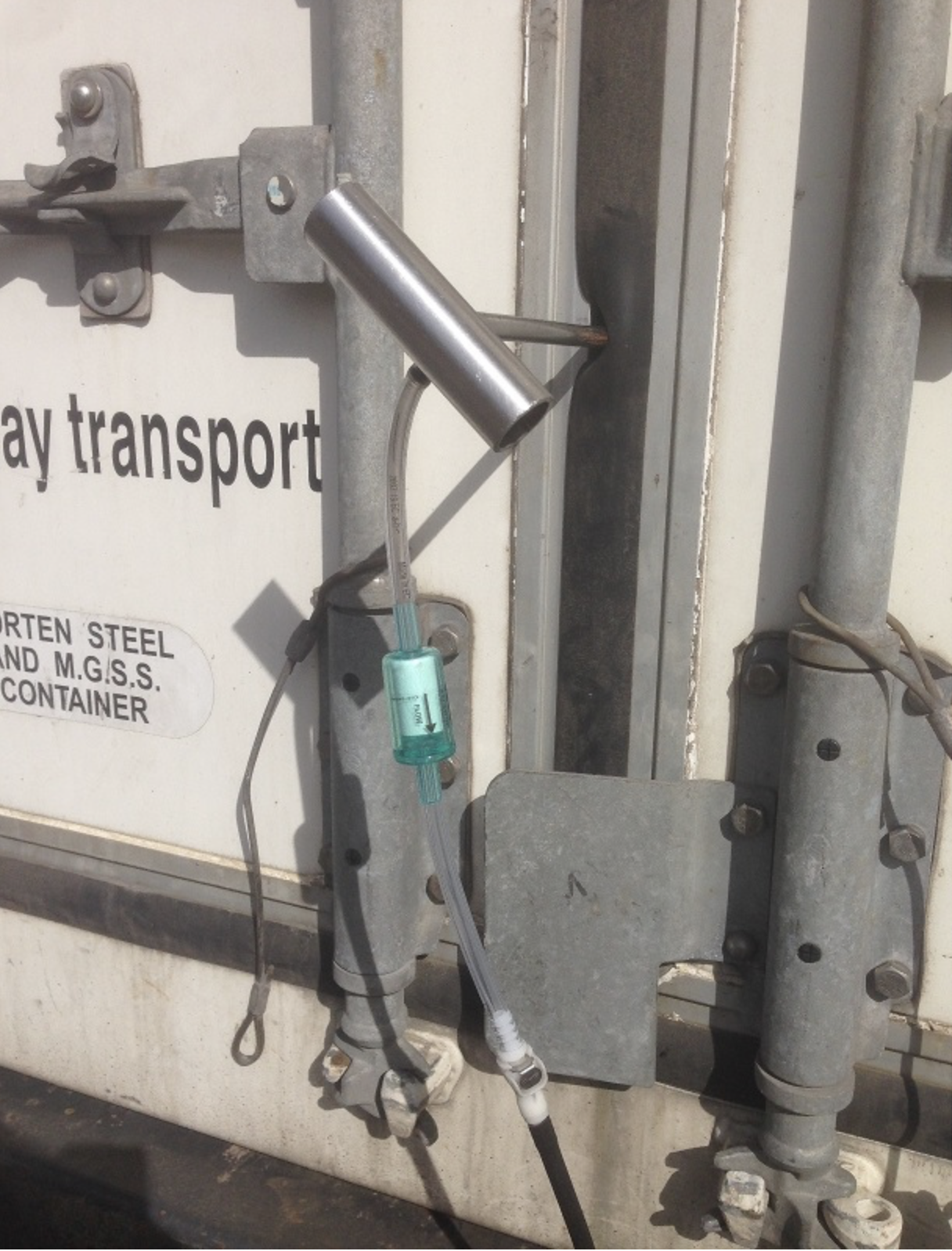
The measurements of fumigants are mainly taken using probes pushed through the rubber seals of the container doors and further connected to monitoring instruments (Figure 2).
Figure 2: Container air is pulled through the nozzle in between the sealing of the container doors via a tube to monitoring instruments
Chemical contamination of air in the container comprises a mixture of several chemicals. However, there is no standardised screening/monitoring instrumentation for containers. In principle, there are two methods to measure the content of the different compounds:
1) The first method seeks to determine the amount of each chemical compound in the mixture simultaneously. This can be done by different instrumentation such as Fourier transformed infrared light (FTIR) and photo ionisation detector (PID), methods that are available in portable instruments that can be used for online monitoring. The advantages of these methods are that a reading is obtained in seconds and that it is easy to use in the field. The drawbacks are the limited specificity and a limit of detection that may be well above the OELs.
2) In the second method the different chemical compounds are separated from each other by chromatography, and then each single compound is identified and quantified using mass spectrometry. The advantage of this method is a precise identification of the compounds and a limit of quantification that is very low, usually well below the OELs. The drawback is that the instrumentation is not suitable for working in the field; rather the analysis will be performed in a laboratory and will take from hours to 1-2 days to complete.
In addition, different kind of adsorbent tubes may be used for specific chemicals. Scale marks on the tube wall indicate the concentration of the compound in the sample. The method is not accurate, but it may give some indication of the concentration. In some cases interference from other compounds may impair the results.
The container should be efficiently ventilated when high concentrations of harmful substances have been detected or when measurements have not been carried out. Containers normally have small openings in the top corners to provide limited natural ventilation. However, if the container is fumigated these openings are often taped on the inside.
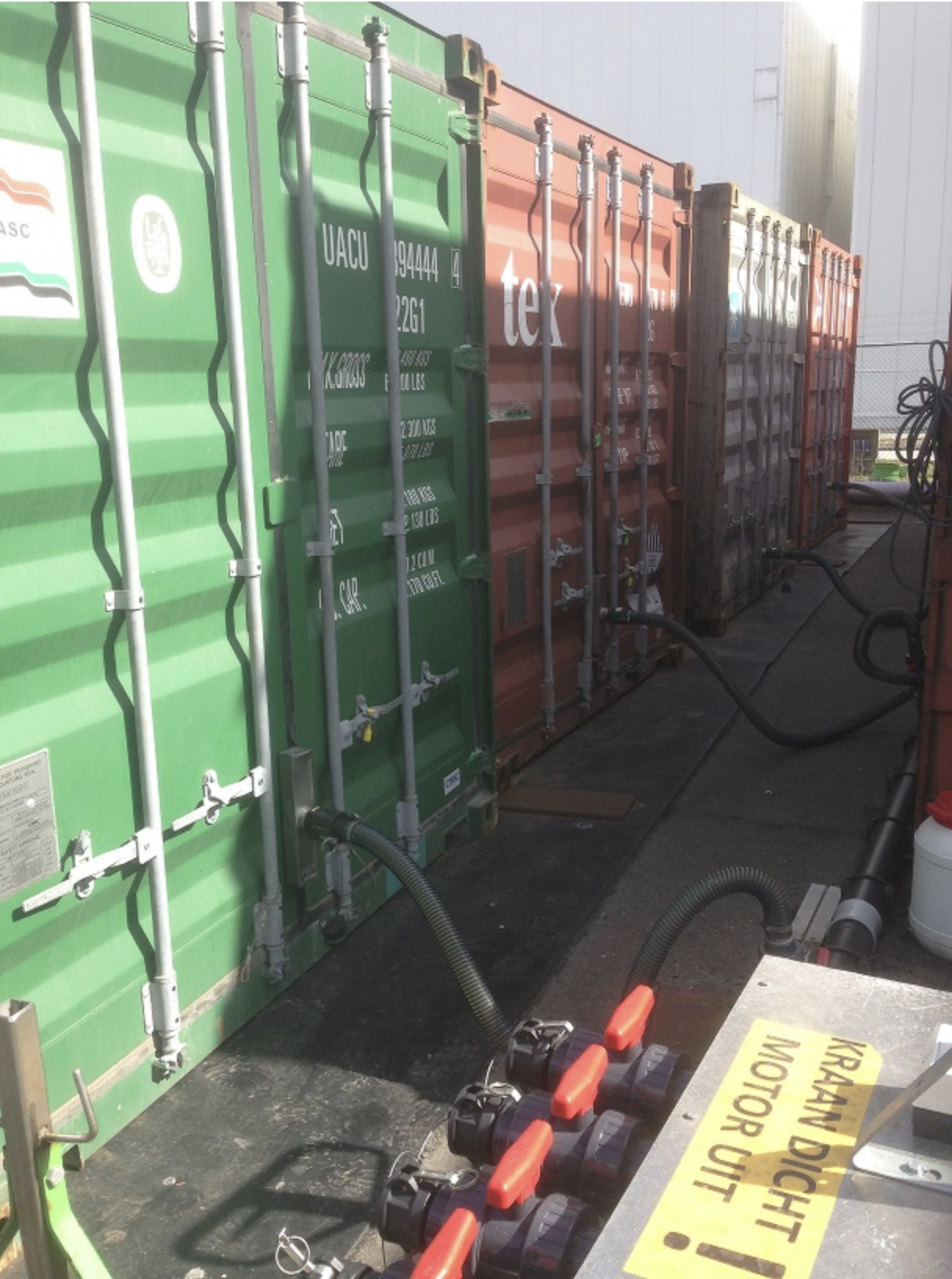
Figure 3: Example of a degasification station
When the atmosphere inside containers is unsafe due to low O2 or high CO2 or CO, levels but with no indication of other gases above OEL, the container doors can be opened for natural ventilation. For all other gases the off-gassing should be performed by forced ventilation.
Forced extraction ventilation (fan sucking air via a tube inserted all the way into the container and fresh air entering via the doors) resulted in rapid washout of the gas[30] [35]. The time for degassing/ventilation will depend on several factors including how the goods are stacked in the container, the filling grade of the container, the nature of the goods, the climatic conditions and what fumigant is used and its concentration. In contrast, natural ventilation (open doors) and blowing ventilation (open doors, fan blowing air towards goods) had virtually no impact on gas levels in deep container air 12 meters from the doors. The authors concluded that the current container design makes safe and speedy sampling and ventilation prior to opening the doors technically difficult. Ventilation must preferably be ongoing during stripping, and a ventilated container that is closed to be stripped next day must be re-ventilated.
Figure 3 shows a degasification station with a “mouthpiece" pushed in between the sealing of the doors. Due to small ventilation openings in the container and narrow opening of the mouthpiece it may take at least 12 hours to completely replace the container air using this method.
Fumigants can enter the body though inhalation and by absorption through the skin after dermal exposure. Personal protective equipment (PPE) includes respirators, gloves, suit, boots and safety goggles, and should always be considered as the last choice of preventive measures. Thus, PPE should be an option only when other preventive measures are not sufficient to reduce the concentration of fumigants below accepted concentrations. It is important to ensure that workers receive regular training and instruction on the procedures to be used and the maintenance and correct use of PPE.
The use of PPE is recommended if containers are opened and entered without prior risk assessment or ventilation, for example by inspection by the food inspectorate or customs. Another scenario when PPE is required is when phosphine is detected by measurements. To obtain an efficient degassing of the container the container doors should be opened, and any residues of solid phosphide should be removed from the container when degassing is initialised.
Risk assessments for the relevant exposure scenarios are necessary in order to determine when and which type of PPE should be used. The risk assessment should take into account the type of fumigant present, its concentration and the duration of the exposure. The respiratory protection must offer enough protection to reduce exposure to levels below the OEL or other appropriate level.
The term Assigned Protection Factor (APF) is used for the level of protection a respirator can be expected to provide if it is functioning properly and the user is wearing it correctly. The APF is highest for Self-contained breathing apparatus (SCBA) which means an air-supplying respirator for which the breathing air source is carried by the user. Supplied-air respirator (SAR) or airline respirator means an air-supplying respirator for which the source of breathing air is not carried by the user. Air-purifying respirator means a respirator with an air-purifying filter, cartridge, or canister that removes specific air contaminants by passing ambient air through the air-purifying element and has generally less APF than the SCBA and SAR.
Chemical protective clothing also needs to be selected according to risk assessments for exposure to the respective fumigants and the relevant scenarios.
Easily understandable information sheets should be available including illustrations showing what PPE to use for different exposure scenarios.
Policy recommendations The main policy recommendations that resulted from the EU-OSHA study (2018)[3], which was based on a literature review, consultation with stakeholders and a field study, are as follows:
|
There are several indications that health risks related to opening and unloading fumigated freight containers are underestimated, probably because of a lack of systematic documentation of incidents of adverse health effects. To ensure worker safety, workplaces should prioritise comprehensive risk assessments and implement effective prevention measures. These include continuous atmospheric monitoring, adequate ventilation systems, targeted worker training, and the adoption of safe and compliant working practices. At the same time, efforts should continue to promote a consistent approach to screening containers arriving at European ports and to strengthen enforcement of regulations on fumigation labelling and transport documentation.
[1] FEPORT. Safety in ports. Available at: https://feport.eu/positions/safety-in-ports/
[2] Gov.uk. Transport, Maritime and shipping. Carriage of Cargoes: Guidance on the Safe Use of Pesticides in Ships. Available at: https://www.gov.uk/government/consultations/consultation-on-the-merchant-shipping-carriage-of-cargoes-regulations-2024/annex-c-draft-mgn-carriage-of-cargoes-guidance-on-the-safe-use-of-pesticides-in-ships
[3] EU-OSHA – European Agency for Safety and Health at Work. Handling fumigated containers in ports — health risks and prevention practices. Discussion paper, 2018. Available at: https://osha.europa.eu/en/publications/handling-fumigated-containers-ports-health-risks-and-prevention-practices
[4] ILO – International Labour Organization. C155 - Occupational Safety and Health Convention, 1981 (No. 155). Available at: https://normlex.ilo.org/dyn/nrmlx_en/f?p=1000:12100:0::NO:12100:P12100_INSTRUMENT_ID:312300
[5] ILO – International Labour Organization. R164 - Occupational Safety and Health Recommendation, 1981. Available at: https://normlex.ilo.org/dyn/nrmlx_en/f?p=1000:12100:0::NO:12100:P12100_INSTRUMENT_ID:312502
[6] Council Directive 89/391/EEC of 12 June 1989 on the introduction of measures to encourage improvements in the safety and health of workers at work. Available at: https://osha.europa.eu/en/legislation/directives/the-osh-framework-directive/1
[7] IMO – International Maritime Organization. International Convention for the Safety of Life at Sea (SOLAS), 1974. Available at: https://www.imo.org/en/about/conventions/pages/international-convention-for-the-safety-of-life-at-sea-(solas),-1974.aspx
[8] IMO – International Maritime Organization. The International Maritime Dangerous Goods (IMDG) Code. Available at: https://www.imo.org/en/ourwork/safety/pages/dangerousgoods-default.aspx
[9] IMO – International Maritime Organization. International Convention for Safe Containers (CSC). Available at: https://www.imo.org/en/about/conventions/pages/international-convention-for-safe-containers-(csc).aspx
[10] Recommendations on the safe use of pesticides in ships (MSC.1/Circ1358). 17 September 2025.
[11] Recommendations on the safe use of pesticides in ships applicable to the fumigation of cargo transport units (MSC.1/Circ.1361/Rev.1). 28 April 2022.
[12] Council Directive 98/24/EC of 7 April 1998 on the protection of the health and safety of workers from the risks related to chemical agents at work (fourteenth individual Directive within the meaning of Article 16(1) of Directive 89/391/EEC). Available at: https://osha.europa.eu/en/legislation/directive/directive-9824ec-risks-related-chemical-agents-work
[13] Directive 2004/37/EC of the European Parliament and of the Council of 29 April 2004 on the protection of workers from the risks related to exposure to carcinogens, mutagens or reprotoxic substances at work (Sixth individual Directive within the meaning of Article 16(1) of Council Directive 89/391/EEC). Available at: https://osha.europa.eu/en/legislation/directive/directive-200437ec-carcinogens-or-mutagens-work
[14] de Souza, A., Narvencar, K. P. and Sindhoora , K.V. (2013) The neurological effects of methyl bromide intoxication. J. Neurol. Sci., 335(1-2): 36-41
[15] Montreal Protocol on Substances that Deplete the Ozone Layer. Available at: https://www.unep.org/ozonaction/who-we-are/about-montreal-protocol
[16] United States Environmental Protection Agency. Methyl bromide. Available at: https://www.epa.gov/ods-phaseout/methyl-bromide
[17] Regulation (EU) 2024/590 of the European Parliament and of the Council of 7 February 2024 on substances that deplete the ozone layer, and repealing Regulation (EC) No 1005/2009. Available at: http://data.europa.eu/eli/reg/2024/590/oj
[18] Samancta. Sampling manual for customs and taxation authorities. Health and Safety. Hazardous Substances. Dangerous atmospheres, fumes and mists.
[19] Gard. Beware of in-transit fumigation risks. 9 October 2025. Available at: https://gard.no/en/insights/beware-of-in-transit-fumigation-risks/
[20] BFR – German Federal Institute for Risk Assessment. Aluminium phosphide: highly toxic pesticide. FAQ, 26/02/2026. Available at: https://www.bfr.bund.de/en/service/frequently-asked-questions/topic/aluminium-phosphide-highly-toxic-pesticide/
[21] Lemoine, T. J., Schoolman, K., Jackman, G. and Vernon, D. D. (2011) Unintentional fatal phosphine gas poisoning of a family. Pediatr. Emerg. Care, 27(9): 869-871
[22] Wilson, R., Lovejoy, F.H., Jaeger, R.J. and Landrigan, P.L. (1980) Acute phosphine poisoning aboard a grain freighter. Epidemiologic, clinical, and pathological findings. JAMA, 244(2): 148-150
[23] Lodde, B., Lucas, D., et al. (2015) Acute phosphine poisoning on board a bulk carrier: analysis of factors leading to a fatal case. J. Occup. Med. Toxicol., 10: 10
[24] Van de Sijpe, P., Lucas, D., Canals, M. L., & Jensen, O. (2020). Acute occupational phosphine intoxications in the maritime shipping sector: Belgian and French reported cases. International maritime health, 71(3), 151-159.
[25] TOXNET. Toxicology Data Network, US National Library of Medicine, National Institute of Health, Health and Human Services. https://toxnet.nlm.nih.gov/
[26] United States Environmental Protection Agency. Sulfuryl Fluoride. Available at: https://www.epa.gov/ingredients-used-pesticide-products/sulfuryl-fluoride
[27] Marine Public. 2026 Cargo Fumigation: The Mandatory Guide. Available at: https://www.marinepublic.com/blogs/marine-law/624343-2026-cargo-fumigation-the-mandatory-guide
[28] WorkSafe New Zealand. Keeping safe from harmful substances while inspecting or unpacking containers, 2017. Available at: https://www.worksafe.govt.nz/topic-and-industry/hazardous-substances/guidance/industry-guidance/inspecting-and-unpacking-containers-harmful-substances/
[29] EU-OSHA – European Agency for Safety and Health at Work. Health risks and prevention practices during handling of fumigated containers in ports. Literature Review. Report, 2018. Available at: https://op.europa.eu/en/publication-detail/-/publication/c221cb33-1877-11e9-8d04-01aa75ed71a1
[30] Svedberg, U., Johanson, G. (2013) Work inside ocean freight containers--personal exposure to off-gassing chemicals. Ann. Occup. Hyg. 57(9):1128-37.
[31] Hinz, R., ’t Mannetje, A., Glass, B., McLean, D., & Douwes, J. (2022). Airborne fumigants and residual chemicals in shipping containers arriving in New Zealand. Annals of work exposures and health, 66(4), 481-494.
[32] European social partners, Ports sector. Guidelines on fumigated containers, 09/11/2023. Available at: https://employment-social-affairs.ec.europa.eu/policies-and-activities/eu-employment-policies/social-dialogue/social-dialogue-texts-database_en
[33] BAuA. TRGS 512 Fumigations. Technical Rule for Hazardous Substances. January 2007, last amended and supplemented: October 2012. Available at: https://www.baua.de/EN/Service/Technical-rules/TRGS/TRGS-512
[34] FNV. Gases in containers. Available at: https://www.fnv.nl/werk-inkomen/veilig-gezond-werken/gevaarlijke-stoffen/gassen-in-containers/
[35] Braconnier R, Keller F-X. (2015) Purging of Working Atmospheres Inside Freight Containers. Ann. Occup. Hyg.,59:641–654.
EU-OSHA – European Agency for Safety and Health at Work. Handling fumigated containers in ports — health risks and prevention practices. Discussion paper, 2018. Available at: https://osha.europa.eu/en/publications/handling-fumigated-containers-ports-health-risks-and-prevention-practices
EU-OSHA – European Agency for Safety and Health at Work, Dangerous substances e-tool. Available at: https://osha.europa.eu/en/tools-and-resources/e-guides/dangerous-substances-e-tool
EU-OSHA – European Agency for Safety and Health at Work. Practical tools and guidance on dangerous substances. Available at: https://osha.europa.eu/en/themes/dangerous-substances/practical-tools-dangerous-substances
Seleziona tema